Tuesday, October 22, 2013

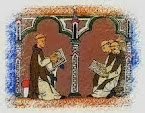
St. Bruno 18th cent. engraving

18th cent. engraving
- I have a particular affection for St. Bruno. Because he was a hermit I guess ;)

CHURCH / Egypt: bishop criticizes Muslim Brotherhood following attack on church
Egypt: bishop criticizes Muslim Brotherhood following attack on church
CWN - October 22, 2013
A Latin-rite Catholic bishop in Egypt has criticized the Muslim Brotherhood following an October 20 attack on a Coptic Orthodox church in a Cairo suburb. The death toll in the attack has risen to four.
Bishop Adel Zaky, a Franciscan who serves as the vicar apostolic of Alexandria, said that the condolences expressed by the Muslim Brotherhood are "a tactic already used by them on other occasions: they express their solidarity to the victims, and then what emerges is that the architects of the terrorist attacks are people related to them."
"Their goal is to cause chaos and then lay responsibility to the weakness of the government and the army that do not guarantee safety," he continued. "The truth is manipulated to divide, and in this I see the work of the devil. They want to divide Christians and Muslims who together brought the downfall of Morsi's Islamic regime."
President Mohamed Morsi, a Muslim Brotherhood leader, was removed from office by the Egyptian military in July following large protests – leading to widespread anti-Christian violence by Muslim Brotherhood supporters.
"The bombings and attacks against Christians have now come to the capital," Bishop Zaky added. "May the Lord save us."
In its brief coverage of the incident, L'Osservatore Romano emphasized that the prime minister of Egypt, the Grand Imam of al-Azhar, and the Grand Mufti of Egypt all condemned the attack.
Additional sources for this story
Some links will take you to other sites, in a new window.
Monday, October 21, 2013
Lutherans, Catholics should repent enmity, work for unity - Pope
Lutherans, Catholics should repent past enmity, work for future unity, Pope says
CWN - October 21, 2013
Pope Francis saluted the progress that has been made in Catholic-Lutheran ecumenical relations—"not only through theological dialogue but also by means of brotherly collaboration in many pastoral fields"—as he met on October 21 with members of the Lutheran-Roman Catholic International Commission on Unity, along with a delegation from the Lutheran World Federation.
This year the Lutheran-Catholic commission is marking the 50th year of dialogue in the wake of Vatican II, and also the 5th centenary of the Protestant Reformation. The Pope underlined the importance of "dialogue on the historical reality of the Reformation, on its consequences and the responses that should be given to it."
"Catholics and Lutherans can ask forgiveness for the harm they have done to each other and for their guilt before God," as they reflect on the conflicts that followed the Reformation, the Pope said. At the same time, he added, they should "together rejoice for the nostalgia for unity that the Lord has reawakened in our hearts."
Additional sources for this story
Some links will take you to other sites, in a new window.

ART: Arts express beauty of Church's Faith
2013-10-19 Vatican Radio
 (Vatican Radio) Pope Francis on Saturday greeted the "Patrons of the Arts" in the Vatican Museums. The group, which is dedicated to preserving the vast and unique collection of art housed in the Vatican Museums, was in Rome for the 30thanniversary of its founding.
In his address, the Holy Father thanked the Patrons for their "outstanding contribution to the restoration of numerous treasures of art preserved in the Vatican collections and to the broader religious, artistic and cultural mission of the Museums."
Pope Francis said, "In every age the Church has called upon the arts to give expression to the beauty of her faith and to proclaim the Gospel message of the grandeur of God's creation, the dignity of human beings made in his image and likeness, and the power of Christ's death and resurrection to bring redemption and rebirth to a world touched by the tragedy of sin and death." The Vatican Museums, he said, "make it possible for countless pilgrims and visitors to Rome to encounter this message through works of art which bear witness to the spiritual aspirations of humanity, the sublime mysteries of the Christian faith, and the quest of that supreme beauty which has its source and fulfillment in God."
Pope Francis concluded his address with the prayer that the patronage of the arts would always be a sign of "interior participation in the spiritual life and mission of the Church" and "an expression of our hope in the coming of that Kingdom."
Listen to Christopher Wells' report:

St. DECLAN ! : Who Was St. Declan?
St. Declan, a prince of the Decies Kingdom in Munster, was born in the 5th century. He was baptised by a priest named Colman, later to become St. Colman. When Declan was seven years old he studied under a sage called Dioma. This training continued for many years until Declan, taking with him some of his disciples, went to Rome for further instruction in Christianity.
While in Rome the Pope consecrated Declan. Declan had a strong desire to return to Ireland and, according to legend, he had in his possession a miraculous black bell with which he summoned an empty vessel to carry him on his journey. The bell was placed in a rock and when Declan prayed the rock floated out to sea. He followed it and eventually, it led him to shore at Ardmore, Co. Waterford. There Declan worked conscientiously among the people and built a Church.
While returning to Ireland it is reported that Declan met St. Patrick. Declan and three other Bishops – Ibar, Cieran and Ailbe were evangelising in Ireland when St. Patrick arrived here. Declan did not confine his work to Ardmore and the Déise region but he also traveled further afield and especially to Cashel.
One of the most remarkable groups of ancient ecclesiastical remains in Ireland can be seen today in Declan's well-loved Ardmore – a beautiful and perfect Round Tower, a singularly interesting ruined Cathedral, the ruins of a second Church beside a holy well, a primitive oratory and some ogham-inscribed pillar stones.
Declan is an outstanding example of a Saint whose cult has not only survived, but has recently shown a marked revival. This is demonstrated by pilgrims, visitors and local people who are proud of St. Declan and the strong faith that they have inherited.


St Declan's Holy Well
Another feature of the pilgrimage to Ardmore was St Declan's Holy Well. Declan had established a hermitage site quite close to the old monastery. The well dates back to the 5th century and is still a place of religious devotion today. On Pattern day, the 24th July, many devotees visit the well. Upon entering the grounds of the hermitage site the pilgrims make a sign of the cross using water from the well and recite prayers. They may also drink the water from the well as they leave the hermitage. Situated on top of the well house are two carved crucifixion scenes. A visit is strongly recommended as this is a delightful well beautifully situated on the cliff walk at Ardmore.
Our Lord and Lady of the Rosary with Aquinas and Dominic

Madonna and Child with St.Thomas Aquinas, St. Dominic Guzman and Angels by Abraham Jansz. van Diepenbeeck, 1596 - 1675
© British Museum http://www.artfund.org/what-we-do/art-weve-helped-buy/artwork/6124/madonna-and-child-with-two-saints-and-angels
Sunday, October 20, 2013
MISSION: "Spreading the flame of faith" - Pope
Jesus invites us to pray with insistence not because he does not know what we need , or is not listening to us, but to express our faith " in a God who calls us to fight with Him, every day, every moment , to defeat evil with good ." "Solidarity" with the Philippines affected by the earthquake .
 Vatican City ( AsiaNews) - "The method of the Christian mission is not proselytizing ," but spreading "the flame of faith that Jesus has kindled in the world." Speaking at today's Angelus , about World Mission Sunday Pope Francis remembered "the Italian Afra Martinelli , who worked for many years in Nigeria : a few days ago she was killed in a robbery. Everyone mourned her, Christians , Muslims, loved her . She proclaimed the Gospel with her life, with the work that she created an education center".
To the almost 100 thousand people present in St Peter's Square for the Angelus prayer , the Pope expressed his closeness " to all the missionaries , who work so quietly , and give their lives " and thanked " all those who with prayer and practical help support missionary work , in particular the concern of the bishop of Rome to spread the Gospel. "
Before the Angelus , Francis spoke of today's Gospel in which Jesus tells a parable about the need to pray always and not lose heart , describing it as "calling out to God day and night".
"This description of prayer strikes us - the Pope said. "But let us ask : why does God want this ? Does He not already know our needs? What's the point on ' insisting ' with God ? That is a good question, which takes us a deeper into a very important aspect of faith: God invites us to pray with insistence not because He does not know what we need, or is not listening to us. Instead, He always hears and knows everything about us, with love. In our daily journey, especially in difficulties in the fight against the evil inside and outside of us , the Lord is on our side , we fight with Him at His side, and our weapon is prayer , that makes us feel His presence, His mercy, His help. But the fight against evil is hard and long, it requires patience and endurance - like Moses, who had to hold His arms up to help his people win ( cf. Ex 17.8 to 13 ) . And this is how it is: there is a daily battle, God is our ally, faith in Him is our strength , and prayer is the expression of this faith . Therefore, Jesus assures us of victory, but asks: "when the Son of Man comes, will he find faith on earth? "(Lk 18:8). Faith is dimming, prayer is dimming and we walk in darkness, we get lost in the journey of life."
" And so we learn from the widow of the Gospel to pray always and not grow weary. But not to convince the Lord with our many words ! He knows what we need better than us! Rather persevering prayer is an expression of faith in a God who calls us to fight with him, every day, every moment , to overcome evil with good. "
After the Angelus , Francis also expressed his "closeness to the people of the Philippines affected by a strong earthquake, and I invite you to pray for that dear nation , which has recently undergone several disasters ."
The Pope concluded by pointing out that yesterday in Budapest Stefano Sándor was beatified. "He was a lay Salesian, who was exemplary in his service to young people in the oratory and vocational education. When the communist regime closed down all Catholic institutions, he faced persecution with courage , and was killed at age 39 . We join the Salesian Family and the Hungarian Church in thanksgiving.
Canadian / North American Martyrs: The definition of nobility
FRIDAY, OCTOBER 19, 2012
The definition of nobility

I was introduced to today's saints in eighth grade. Our parochial school had Catholic textbooks, and there was a poem in our English book about St. Isaac Jogues (seen in the cassock in this stained glass window from a Massachusetts parish). The man in secular clothes is his fellow martyr, Rene Goupil, who wasn't even officially a Jesuit until rather late in the game, when it was obvious that he was going to die a martyr, having been faithful to the Jesuit mission "unto death." Jogues was the one who, having already suffered tortures that left his hands mangled and mutilated, had been rescued by the Dutch (no friends of the papist preachers) and brought home to Europe, only to beg permission to return to the missions. (Probably not what I would have done.)
These men were living in Huron longhouses (not tipis) just 100 years after St. Ignatius' death but kept a tradition started in Ignatius' own lifetime: sending detailed reports (known, then and now, as the "Jesuit Relations" from their Latin title) back to the Superior General about the work of the missions, the life of the Jesuit community, and the well-being of each member. This weekend, we will see the extraordinary fruits of some of those reports when the Mohawk-Algonquin convert Kateri Tekakwitha is canonized as the first Native American saint. The link above will send you to the "Relations" from the North American missions ("New France").
Up in Canada, the Jesuits had a whole Christian village going. I treasure the memory of a day spent at "Ste-Marie-among-the-Huron," reconstructed on the original site (and the original location of St. Jean Brebeuf's grave). In all, eight saints are honored as the "North American martyrs."
But there are others who would undermine the heroism of these noble men. Just yesterday I edited the Wikipedia article for two "factoids" that seem to have been entirely invented by the person who wrote them: claims that "the tortures [suffered by the martyrs--who, after all, died from them] were exaggerated"in order to impress potential donors back in Europe, or that the Huron weren't really that engaged with the missionaries (no, they just let them live in the longhouses and move with them to their summer and winter camps), and the Iroquois attacked because they were so mad that the Huron didn't follow their advice to steer clear of all Europeans. (After almost 400 years, where did this new information come from?) One assertion (removed by another alert user) suggested that the smallpox virus was part of a deliberate plot, though perhaps not by the Jesuits (but then again, who knows?).
The Jesuit martyrs were not canonized because only they died in a particularly brutal way while preaching the Gospel. They are models because of their heroic love of God. These were men of commitment and passion. Here's a sample of that holy passion, from the spiritual journal of St. Jean Brebeuf (who seems to have suffered the most protracted martyrdom of the whole group):
For two days now I have experienced a great desire to be a martyr and to endure all the torments the martyrs suffered.... I vow to you, Jesus my Savior, that as far as I have the strength I will never fail to accept the grace of martyrdom, if some day you in your infinite mercy should offer it to me, your most unworthy servant.... On receiving the blow of death, I shall accept it from your hands with the fullest delight and joy of spirit.... My God, it grieves me greatly that you are not known, that in this savage wilderness all have not been converted to you, that sin has not been driven from it.