Search This Blog

Friday, August 5, 2011

From the catechetical instructions by Saint John Mary Vianney, priest
The glorious duty of man: to pray and to love


My little children, reflect on these words: the Christian's treasure is not on earth but in heaven. Our thoughts, then, ought to be directed to where our treasure is. This is the glorious duty of man: to pray and to love. If you pray and love, that is where a man's happiness lies.

Prayer is nothing else but union with God. When one has a heart that is pure and united with God, he is given a kind of serenity and sweetness that makes him ecstatic, a light that surrounds him with marvelous brightness. In this intimate union, God and the soul are fused together like two bits of wax that no one can ever pull apart. This union of God with a tiny creature is a lovely thing. It is a happiness beyond understanding.

We had become unworthy to pray, but God in his goodness allowed us to speak with him. Our prayer is incense that gives him the greatest pleasure.

My little children, your hearts are small, but prayer stretches them and makes them capable of loving God. Through prayer we receive a foretaste of heaven and something of paradise comes down upon us. Prayer never leaves us without sweetness. It is honey that flows into the soul and makes all things sweet. When we pray properly, sorrows disappear like snow before the sun.

Prayer also makes time pass very quickly and with such great delight that one does not notice its length. Listen: Once when I was a purveyor in Bresse and most of my companions were ill, I had to make a long journey. I prayed to the good God, and, believe me, the time did not seem long.

Some men immerse themselves as deeply in prayer as fish in water, because they give themselves totally to God. There is no division in their hearts. O, how I love these noble souls! Saint Francis of Assisi and Saint Colette used to see our Lord and talk to him just as we talk to one another.

How unlike them we are! How often we come to church with no idea of what to do or what to ask for. And yet, whenever we go to any human being, we know well enough why we go. And still worse, there are some who seem to speak to God like this: "I will only say a couple of things to you, and then I will be rid of you." I often think that when we come to adore the Lord, we would receive everything we ask for, if we would ask with living faith and with a pure heart.


From a Spiritual Canticle by Saint John of the Cross, priest
I give myself as your spouse for ever


The soul united to God and transformed in him draws from within God a divine breath, much like the most high God himself. And God, abiding in the soul, breathes forth the life of the soul as its exemplar. This I take to be what Paul meant when he said: Because you are children of God, God has sent the Spirit of his Son into your hearts, crying, "Abba, Father"; this is what takes place in those who have achieved perfection.

One should not wonder that the soul is capable of so sublime an activity. For if God so favors her that she is made God-like by union with the most Holy Trinity, I ask you then, why it should seem so incredible that the soul, at one with the Trinity and in the greatest possible likeness to it, should share the understanding, knowledge and love which God achieves in himself.

How this is possible no other power or wisdom can express, save by explaining how the Son of God obtained this sublime state for us and won for us the power to be the children of God, as he asked of the Father:Father, I desire that where I am those you have given me may also be with me, that they may see the glory you have given me, that is, that they may share with certainty the very task I perform.

And then he said: "Not for them alone do I ask but also for those who will come to believe in me through their teaching, that all may be one as you, Father, are one in me and I in you, that they may be one in us; that the world may believe that you have sent me. And the glory you have given me I have given them that they may be one as we are. I in them, you in me, that they may be made perfect, and the world will know that you sent me and as you have loved me, so I have loved them.

The Father thus gives them the same love he shares with the Son, though not by nature as with the Son, but through unity and transformation of love. One should not think that the Son is asking the Father to make the saints one with him in essence and nature as the Son is with the Father, but rather that they be united with him in love, just as the Father and Son are one in the essential unity of love. Accordingly, souls possess the same goods by participation that the Son possesses by nature. As a result, they are truly divine by participation, equals and companions of God.

Thus Peter said: May grace and peace be perfected in you in the knowledge of God and Christ Jesus our Lord. For all things of his divine power, which are given to us for our life and goodness, are given through the knowledge of him who called us to his own glory and power, by which he has given us great and precious promises, that by these we may be made partakers of the divine nature. So the soul, in this union which God has ordained, joins in the work of the Trinity, not yet fully as in the life to come, but nonetheless even now in a real and perceptible way.

O my soul, created to enjoy such exquisite gifts, what are you doing, where is your life going? How wretched is the blindness of Adam's children, if indeed we are blind to such a brilliant light and deaf to so insistent a voice.

Thursday, August 4, 2011

FAITH: WWII killed 2/3 of Christians in Japan

The priests who survived the atomic bomb
The remarkable survival of the Jesuit Fathers in Hiroshima has echoes in the Bible and in the story of Fatima
By Donal Anthony Foley on Thursday, 5 August 2010

The priests who survived the atomic bomb
This Friday, August 6, will see the Feast of the Transfiguration celebrated in the Church. It commemorates the occasion when Christ, accompanied by Peter, James, and John, went up a high mountain – traditionally identified with Mount Tabor in Galilee – and was there "transfigured" before them, so that "his face shone like the sun, and his garments became as white as light" (Mt 17:2).
The Greek word for transfiguration is metemorphothe, from which we get the word "metamorphosis". So the Transfiguration was a complete and stunning change in the appearance of Jesus, as his divinity shone through his humanity, in a way which completely overwhelmed the awestricken disciples. Its purpose was to prepare them for the reality of the crucifixion, so that having once seen – in some sense – his divinity, they would be strengthened in their faith.
August 6 is also an important date in world history: the fateful day on which the first atomic bomb was dropped on Hiroshima in Japan. On that day, a Monday, at 8.15 in the morning, an American B-29 bomber, Enola Gay, dropped its bomb "Little Boy", which fell to a predetermined detonation height of about 1,900 feet above the city. It exploded with a blinding flash, creating a giant fireball, which vaporised practically everything and everyone within a radius of about a mile of the point of impact. It is estimated that up to 80,000 people were directly killed by the blast, and by the end of the year, that figure had climbed considerably higher, due to injuries and the effects of radiation. Over two thirds of the city's buildings were completely destroyed.
But in the midst of this terrible carnage, something quite remarkable happened: there was a small community of Jesuit Fathers living in a presbytery near the parish church, which was situated less than a mile away from detonation point, well within the radius of total devastation. And all eight members of this community escaped virtually unscathed from the effects of the bomb. Their presbytery remained standing, while the buildings all around, virtually as far as the eye could see, were flattened.
Fr Hubert Schiffer, a German Jesuit, was one of these survivors, aged 30 at the time of the explosion, and who lived to the age of 63 in good health. In later years he travelled to speak of his experience, and this is his testimony as recorded in 1976, when all eight of the Jesuits were still alive. On August 6 1945, after saying Mass, he had just sat down to breakfast when there was a bright flash of light.
Since Hiroshima had military facilities, he assumed there must have been some sort of explosion at the harbour, but almost immediately he recounted: "A terrific explosion filled the air with one bursting thunderstroke. An invisible force lifted me from the chair, hurled me through the air, shook me, battered me [and] whirled me round and round…" He raised himself from the ground and looked around, but could see nothing in any direction. Everything had been devastated.
He had a few quite minor injuries, but nothing serious, and indeed later examinations at the hands of American army doctors and scientists showed that neither he nor his companions had suffered ill-effects from radiation damage or the bomb. Along with his fellow Jesuits, Fr Schiffer believed "that we survived because we were living the message of Fatima. We lived and prayed the rosary daily in that home."
There is actually a biblical precedent for what happened to the eight Jesuits, in the book of Daniel. In Chapter 3, we read of the three young men who were thrown into the fiery furnace at the orders of Nebuchadnezzar, but who survived their ordeal and even walked around in the midst of the flames, accompanied by an angel who looked like "a son of the gods".
After this first bombing, the Japanese government refused to surrender unconditionally, and so a second atomic bomb was dropped on the city of Nagasaki three days later on August 9. Nagasaki had actually been the secondary target, but cloud cover over the primary target, Kokura, saved it from obliteration on the day. The supreme irony is that Nagasaki was the city where two-thirds of the Catholics in Japan were concentrated, and so after centuries of persecution they suffered this terrible blow right at the end of the war.
But in a strange parallel to what happened at Hiroshima, the Franciscan Friary established by St Maximilian Kolbe in Nagasaki before the war was likewise unaffected by the bomb which fell there. St Maximilian, who was well-known for his devotion to the Blessed Virgin, had decided to go against the advice he had been given to build his friary in a certain location. When the bomb was dropped, the friary was protected from the force of the bomb by an intervening mountain. So both at Hiroshima and Nagasaki, we can see Mary's protective hand at work.
The apparitions at Fatima in Portugal took place in 1917, when from May to October three young children, Francisco and Jacinta Marto, and their cousin, Lucia dos Santos, saw the Blessed Virgin six times, culminating in the "miracle of the sun" on October 13, when 70,000 people saw the sun spin in the sky and change colour successively, before falling to the earth in a terrifying manner. Many of those present thought it was the end of the world, but the sun reassumed its place in the sky to great cries of relief.
The essence of the Fatima message concerns conversion from sin and a return to God, and involves reparation for one's own sins and the sins of others, as well as the offering up of one's daily sufferings and trials. There was also a focus on prayer and the Eucharist at Fatima, and particularly the rosary, as well as the Five First Saturdays devotion, which involves Confession, Holy Communion, the rosary and meditation, for five consecutive months with the intention of making reparation to Our Lady (for more details visit Theotokos.org.uk).
It's interesting to reflect, then, on the theme of "transfiguration" which links these various events. Christ's face shone like the sun on Mount Tabor, and at Fatima, Our Lady worked the great miracle of the sun to convince the huge crowd which had gathered there that the message she was giving to mankind was authentic. Consider, too, that the poor people of Hiroshima and Nagasaki suffered as man-made "suns" exploded in their midst causing horrific devastation. But at Hiroshima the eight Jesuits, who were living the message of Fatima, and particularly the daily rosary, were somehow "transfigured," protected by God's divine power, from the terrible effects of the bomb.
Surely there is a message here for all of us, that living the message of Fatima, in a world which grows ever more dangerous, and which is still threatened by nuclear war, is as profound a necessity for us as it was for Fr Schiffer and his companions.


POLITICS: the Western World's future in Catholic hands

Buttiglione: Europe's future rests on Catholic political leadersRSSFacebookAugust 04, 2011

Young Catholics must enter political life to safeguard Europe's future, according to one of Italy's foremost Catholic political thinkers.

Rocco Buttiglione, the vice-president of Italy's Chamber of Deputies, told the Catholic News Agency:

I think the great reservoir of values today is in the Christian people and we must tell them, you must make politics, you must enter into politics, you must make with your hands the future of the land.

Buttigilione, a close friend of Blessed John Paul II, became the focus of an international controversy in 2004, when his nomination to the European Commission was blocked by critics who objected to his active Catholic faith, and particularly to his statement that homosexual acts are morally wrong.

Source(s): these links will take you to other sites, in a new window.

Wednesday, August 3, 2011

Sisters of Life

Life and Faith in Hell's Kitchen

An alternative in a city where 41% of pregnancies end in abortion.


'Safe, legal and rare" has long been the pro-choice mantra, but these days it applies less and less to the reality of abortion. In New York City, officials reported this year that 41% of pregnancies end in abortion—double the national rate. In the black community, the figure is 60%.

Numbers like these motivate the Sisters of Life, a small order of nuns celebrating its 20th anniversary this summer. The sisters take traditional vows of poverty, chastity and obedience, but they also take a fourth vow "to protect and enhance the sacredness of human life." According to Archbishop Timothy Dolan, once the sisters connect with unwed pregnant women in need, "the battle is half over."

The order was the vision of the late John Cardinal O'Connor, whose Nov. 2, 1989, weekly column in the newspaper Catholic New York was titled "Help Wanted: Sisters of Life."

One respondent was Agnes Mary Donovan, a professor of developmental psychology at Columbia University Teachers College. She became one of the order's founders in 1991 and Mother Superior two years later.

There are now 70 members, with an average age of 37. Like Mother Agnes, the women who have joined are educated and worldly. They include a Yale Russian major who aspired to join the CIA, a former nurse who worked in the Middle East, and a former computer-manufacturing executive.

The sisters help those suffering from the trauma of a past abortion and those who want to put their children up for adoption. But their most important work is their "Visitation Mission," a spiritual call center where sisters have contact with about 700 women a year.

According to the coordinator of the Visitation Mission, Sister Magdalene, some of the women seeking counsel have "all the means in the world" but feel that their social and professional lives, as well as their marriage prospects, would be over unless they abort. "But pregnancy is a wake-up call," she explains. "It tends to stop them from doing what they might imagine they'd do without a second thought. We believe it's a moment of grace."

Half of those counseled by the Visitation Mission remain at home. Others are placed in private homes or in maternity facilities run by other religious orders. And then there are the women who move in with the nuns, in the Convent of the Sacred Heart in Manhattan's Hell's Kitchen.

There the women can stay as long as six months prior to giving birth and up to a year afterward, some holding down jobs, others studying. Meanwhile the sisters go about their lives of prayer, contemplation and occasional rollerblading. The nuns "rely on providence"—i.e., donations—for food, baby clothing and strollers. They excel at recruiting "Josephs" for heavier household chores. "Our motto is that no man leaves without doing us a favor," says Sister Rita Marie, the local convent superior.

The rooms are spartan and lights go out at 9 p.m. Following Cardinal O'Connor's vision, the nuns take a healing approach. They don't keep records of who is Catholic and who isn't, they don't try to convert anyone or arrange a baptism unless asked, and they don't even require that the women pray.

Since the first guest arrived in 1998, 150 babies have been born at the convent. The sisters take heart in "the beauty of a mother coming to the understanding of the dignity of her calling and how that gives life back to her," Sister Rita Marie explains.

Guests have included the homeless, pregnant and undocumented Tanzanian who showed up sobbing on the lawn of the sisters' retreat center in Stamford, Conn., and later likened the care at Sacred Heart to "angels planting a root and watering it every day." Then there was the Trinidadian nanny, six months pregnant with twins, whose boyfriend was trying to induce a miscarriage by kicking her down the stairs. There was the Polish immigrant who studied for the MCAT exam while living at the convent, as well as the former network journalist whose boyfriend split when she got a Down Syndrome diagnosis, and whose friends could not believe she'd throw herself so far "off-track" to have the child.

Another alumna had just finished a graduate program in England, gotten pregnant, been dumped by her law-student boyfriend and returned to the U.S. "in a horrible state of depression." For an educated woman with professional ambitions, she said "an abortion seems like the most practical thing in the world. But once you do get pregnant, it's not so easy."

She had a daughter, got a magazine job and a subsidized apartment. The boyfriend then returned and became a lawyer here. The couple married and had two more daughters. She is now managing editor of one of fashion's top magazines and sends her children to private school on the Upper East Side. "Life can turn on a dime," she tells colleagues she trusts with her story.

Mr. McGowan is the author of "Gray Lady Down: What the Decline and Fall of the New York Times Means for America" (Encounter, 2010).

___________________________________________________________________________________________________________________
"The protection of human life [at all its stages] is the "rock solid and inviolable" foundation upon which all other human rights are based." - Benedict XVI

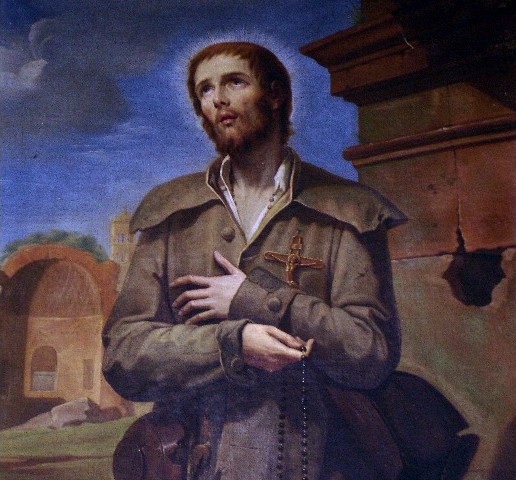
St. Benedict Joseph Labre - Fool in Christ


Saint Benedict Joseph Labre

Commemorated April 16


SAINT BENEDICT JOSEPH LABRE
Mendicant, Pilgrim
(1748-1783)


Saint Benedict Joseph Labre was born in the village of Amettes, near Boulogne in France, on March 26, 1748. He was the eldest of a family of fifteen children. From his earliest years he manifested exceptional piety, and was particularly attracted to the Blessed Sacrament of the altar. His early education was confided to one of his uncles, who was the parish priest of Erin, in view of his future ordination. He was not certain, however, that he was called to the priesthood, and said, "It is very beautiful to be a priest, but I fear losing my soul while saving others." He desired the contemplative life and entered the Carthusian Order. But it was not long before his Superiors decided he did not have the vocation to that Order.

After making several more requests to enter monasteries where he might serve God according to his heart's desire, he was finally received in November 1769 by the Cistercians, whom he greatly edified by his silent prayer and communion with God. His happiness, however, proved to be short-lived; he was taken very ill and again his Superiors decided that he was not called to be one of their number. Providence had permitted these events. Upon his recovery, he discovered God's holy will for him, which was, he wrote, that "remaining in the midst of the world, he devoutly visit as a pilgrim the famous places of Christian devotion."

With this purpose ever before him, he made solitary pilgrimages to many of the great shrines of Europe, taking with him only a rosary, a crucifix, and a little sack containing his New Testament, the Imitation of Christ and a Breviary. He visited the shrine of Our Lady of Loreto in Italy no fewer than ten times during his life.

One writer tells us that he seemed to have been destined by God to recall to men's mind the poverty of Christ. He ate nothing but the fragments he received from charity, and never kept any food given him for another day, becoming himself a provider for the poor with his surplus. He slept outdoors as a rule, and esteemed himself happy in suffering hunger, thirst, heat, rain, cold and snow. He was ordinarily regarded as a fool, and was often the brunt of mockery by children and bystanders. No mistreatment could discourage him, since he kept ever before his mind the mortified life of the Master and His Blessed Mother.

He loved most of all the Church of Our Lady of the Mountains in Rome. He spent much time in this, his favorite place of devotion, and on Wednesday of Holy Week in the year 1783, when he went to pray, he was taken suddenly ill, and expired while those who attended him in his last moments were saying the invocation of the litany of the dying: "Holy Mary, pray for him."


Reflection. Let us learn from the life of Saint Benedict Joseph to remember that we are always in the presence of God, and particularly so when in church; for Jesus is really, truly, and substantially present in the Most Blessed Sacrament of the Altar.

____________________________________________________________________________________


Sources: Vie des Saints pour tous les jours de l'année, by Abbé L. Jaud (Mame: Tours, 1950); Lives of the Saints for Every Day of the Year. (Reprint of the work of John Gilmary Shea, with Appendix including recently canonized Saints) (Benziger Brothers: New York, 1955. Third Edition: Tan Books and Publishers: Rockford, Ill., 1995).

__________________________________________________________________

"Each of us is willed - each of us is loved - each of us is necessary." - Benedict XVI


Get your information fix on your phone. With MSN Mobile you get regular news, sports and  finance updates. Try it today!

St. Basil, Fool for Christ

From the blog Mere Comments...


The iconic St. Basil's Cathedral in Moscow's Red Square was not named for Basil the Great but for a fool-in-Christ named Basil, whose feast day in the Russian church is today. He lived and witnessed while Ivan the Terrible was Czar. The Russian Fools-in-Christ are essentially a testament to the other-worldly foolishness of the Gospel, which as the foolishness of God is wiser the wisest of man's philosophies. He once laughed while a rich merchant ordered multiple expensive, sturdy, long-lasting boots from a cobbler. Why? Because, Basil said, the merchant will die tomorrow. He did.

Perhaps the most important thing to take away from these odd saints is that God calls the ultimate shots; the second most important thing perhaps is that you can't take it with you, just your self, either clothed in Christ or clothed with your sins and all your words and actions, and maybe your bank statements (minus the funds). In a sense, we all die tomorrow.

The architecture of this church is not typical of Russian churches--multi-colored multiple domes--and is a unique statement that took on the name of a foolish saint whose only appeal was to the mercy of God in Christ. The man in the photo similarly has nothing upon which to hope other that the Lord's grace and mercy. The Lord does call the shots, and the Resurrection is the biggest of all. To all the movers and shakers Basil essentially says, "Okay, Mover, now you're dead. Your move."

"Mother Teresa" of Bangalore, a new battle for her lepers
Since 2007, the rehabilitation center has had to sacrifice the dormitory for poor and homeless, because the government did not renew the lease on all terrains. At the end of July, the nun was in danger of having to leave India, where she worked for 29 years.

Bangalore (AsiaNews / Agencies) - Sister Jacqueline Jean, the "Mother Teresa" of Bangalore, is preparing for a new battle to save the rehabilitation center where she has assisted in nearly 30 years - and continues today - nearly 5 thousand lepers. After nearly having to abandon her patients suffering from leprosy, the English missionary now fears for the whole Sumanahalli Society:Since 2007, the government has not renewed it concessions and rent on the 63 acres of land on which the facilities of the Center stand to make way for "road widening."

The reduction of the concessions - now the center occupies only 55 acres - has led to the sacrifice of the building where they housed the beggars and those who had no home. But Sister Jean is also concerned about the whole Sumanahalli Society, which includes hospitals, schools, a rehabilitation center for leprosy and HIV / AIDS patients, and other structures.

Late last July, the government has refused the annual renewal of Sister Jean's visa, giving her a month's notice to leave the country and return to Britain. On the back of numerous negative reactions, the Indian Minister of the Interior P. Chidambaran intervened by extending the visa of the nun "indefinitely". (cf. AsiaNews.it, "Government u-turn: Bangalore "Mother Teresa" can stay in India ").

Tuesday, August 2, 2011

Tota pulchra es

Tota pulchra es

From Wikipedia, the free encyclopedia

Tota pulchra es is an ancient Catholic prayer, written in the fourth century. It is one of the five antiphons for the psalms of Second Vespers for the Feast of the Immaculate Conception. The title means "You are completely beautiful" (referring to the Virgin Mary). It speaks of her immaculate conception. It takes some text from the deuterocanonical book of Judith, and other text from Song of Songs, specifically 4:7.[1]

Composers to set the prayer to music include Anton Bruckner,[2] Pablo Casals, Maurice Duruflé, Guillaume du Fay,[citation needed], Grzegorz Gerwazy Gorczycki, and Ola Gjeilo.

[edit]Text

Tota pulchra es, Maria,
et macula originalis non est in te.
Vestimentum tuum candidum quasi nix, et facies tua sicut sol.
Tota pulchra es, Maria,
et macula originalis non est in te.
Tu gloria Jerusalem, tu laetitia Israel, tu honorificentia populi nostri.
Tota pulchra es, Maria.

You are all beautiful, Mary,
and the original stain [of sin] is not in you.
Your clothing is white as snow, and your face is like the sun.
You are all beautiful, Mary,
and the original stain [of sin] is not in
 you.
You are the glory of Jerusalem, you are the joy of Israel, you give honour to our people.
You are all beautiful, Mary.


Iraq: Catholic church bombedRSSFacebookAugust 02, 2011

A bomb exploded at a Syrian Catholic church in Kirkuk, causing severe damage to the church and injuring 23, including the parish priest, Father Imad Yalda. Police then discovered bombs at two other Christian churches in the northern Iraqi city.

"We are shocked and really sad," Archbishop Louis Sako of Kirkuk told Vatican Radio. The bombing was particularly appalling, he observed, because it came at the opening of Ramadan, which "is supposed to be a month of fasting and prayer, to do good things."

Nevertheless, a Catholic priest in Kirkuk told AP: "The terrorist want to make us feel Iraq, but they will fail."

Source(s): these links will take you to other sites, in a new window.

Monday, August 1, 2011

WOMEN: Indian state offers incentives to discourage sex-selection abortion

Indian state offers incentives to discourage sex-selection abortionRSSFacebookAugust 01, 2011

Responding to a drastic decline in the ratio of girls born in India—the result of widespread sex-selection abortion—the eastern state of Jharkhand has announced a program to provide financial support for the parents of female children.

Arjun Munda, chief minister of Jharkhand, announced on July 29 that the state government will deposit Rs 5000 ($ 115) in the name of every newborn female child born in poor families, and add similar donations each year until the girl reaches the age of 5. While the girl continues receives a free education until reaching the age of 16, the deposits, invested in government securities, will grow to Rs 160,000 ($3,600), helping parents to finance her higher education or her marriage.

A 2011 national census revealed that India was "missing" more than 7 million girls under the age of 7, as a result of rampant sex-selection abortion. The preference for boys child is deeply rooted in Hindu cultural bias, reflecting the belief that one cannot attain moksha (liberation) unless a son performs his last rites as mandated by Hindu scriptures. This religious sanction, combined with heavy pressure for small families, has rendered the girl children unwanted. A complicating factor is the expectation that a young woman's parents will offer a heavy dowry when she is married: a factor that adds to the financial pressure on strapped families.

Source(s): these links will take you to other sites, in a new window.