Search This Blog

Friday, August 17, 2012

ASSUMPTION of Mary: Assumed into heaven, Mary is with God

On Assumption, pope says Mary is with God, listening to prayers

By
Catholic News Service

CASTEL GANDOLFO, Italy (CNS) -- Assumed into heaven, Mary is with God and is ready to listen and respond to cries for help, Pope Benedict XVI said.

Joining God in heaven, Mary "does not draw away from us, does not go to an unknown galaxy," but becomes "even closer to each one of us," the pope said Aug. 15 during his homily at Mass for the feast of the Assumption.

With his 88-year-old brother, Msgr. Georg Ratzinger, seated in the front pew, the pope celebrated an early morning Mass in the Church of St. Thomas. Using a white-handled cane, the pope walked to the church across the square from the main entrance to the papal villa at Castel Gandolfo.

Mary's assumption, he said, gives believers "a sure hope: God expects us, he awaits us. We are not moving toward a void."

"And going to that other world, we will find the goodness of the Mother (Mary), we will find our loved ones, we will find eternal love," the pope said.

Pope Benedict, who set aside his prepared text for much of his homily, said that Mary's closeness to God ensures her closeness to all God's creatures.

"Mary, totally united with God, has a heart that is so big that all creation can find a place there," a fact illustrated by the votive offerings people around the world leave at Marian shrines and statues when their prayers are answered, he said.

Mary's presence in heaven shows that "in God there is room for man," he said.

At the same time, he said, she demonstrates that "in man there is room for God," and when God is present within individuals and they allow God to influence the way they act in the world, the world becomes a better place.

Many people today speak of their hopes for a better world, he said.

"If and when this better world will come, we do not know. But one thing is certain: A world that moves away from God will not become better, but worse. Only the presence of God can guarantee a better world."

The Christian hope for a better world and for finding a place with God for eternity "is not just yearning for heaven," but allowing one's desire for God to "make us untiring pilgrims, increasing our courage and strength of faith, which is at the same time the courage and strength of love," he said.

Later Aug. 15, Pope Benedict recited the Angelus with visitors crowded into the courtyard of the papal summer villa.

Continuing his reflection on the meaning of the Assumption, he said that "it shows us, in a brilliant way, our destiny and that of humanity and of history. In Mary, in fact, we contemplate that reality of glory to which each one of us and the entire church is called."

END

Pro Life Flag to Fly over Kelowna City Hall


Pro Life Flag to Fly over Kelowna City Hall

City proclaims pro life week, pro-life flag will fly.


Kelowna, BC. August 15, 2012: The City of Kelowna has once again proclaimed the last week of September as Protect Human Life Week. The City has also agreed to fly a pro life flag over City Hall during the week. Mayor Walter Gray signed the proclamation in July of this year, and the city's Director of Communications Tom Wilson approved the courtesy flag request after modifications were made to the original design.


The original flag had the statement "From Conception to Natural Death" and was rejected for not meeting "the requirement of reflecting the actual event" and for "advocating a point of view." However, when Kelowna Right to Life agreed to remove the statement from the flag, city officials agreed to fly it. The Proclamation reads in part: "It is the intention of this proclamation to promote respect and protection to all human life, especially the infirm, the aged, the handicapped, and the unborn."


Executive Director Marlon Bartram says that KRTL is grateful to the City of Kelowna and Mayor Walter Gray for accommodating their requests. "At a time when pro life groups on Canadian college campuses are routinely censored and pro life initiatives get very little positive exposure in the news media, it is certainly refreshing to have our Mayor's Office recognize our efforts on such a consistent basis." He added that, "Their continuing proclamation of Protect Human Life Week shows the rest of the country that Kelowna truly is an inclusive place that respects the many diverse communities comprising our great city."


It is the 5th consecutive year the City of Kelowna has proclaimed Protect Human Life Week. Events for the week include a Walk for Life fundraiser September 22 in Mission Creek Park, an exclusive screening of the new film October Baby on September 28, and the annual Life Chain to close out the week on September 30. October Baby is a long-awaited film loosely based on the true story of a woman - Gianna Jessen - who survived on abortion attempt on her life when her mother was 5 months pregnant with her. Jessen spoke in Kelowna 3 years ago at a dinner event hosted by Kelowna Right to Life. The movie screening will be held at Evangel Church on Gordon Drive at 7:00 pm.


KRTL also plans to conduct a postcard campaign during the week, distributing pro life postcards to hundreds of households in the Kelowna area. For more information on KRTL and Protect Human Life Week, visit www.prolifekelowna.com.


- 30 -

Contact:

Marlon Bartram

250 862-8202

kelownarighttolife@telus.net

Description: Description: Description: Description: cid:image001.jpg@01CD7AE0.07191640


Monday, August 13, 2012

PARALYMPICS: Orphan raised by Mother Teresa Sisters in Baghdad is to compete

Orphan raised by Mother Teresa Sisters in Baghdad is to compete in Paralympics

By Mark Greaves on Thursday, 9 August 2012

Ahmed Kelly will represent Australia at the Games


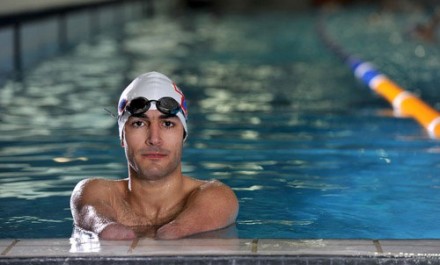
An orphan raised by the Missionaries of Charity in Baghdad is to compete in a sprint swimming event at the London Paralympics.
Ahmed Kelly, who grew up in Australia after being adopted aged nine, will race in the 50m breaststroke. He has already broken a world record twice at 100m.
Kelly, who was born with severely underdeveloped arms and legs, was left outside the Sisters' orphanage in Baghdad and raised there until he was adopted, along with his brother, by Moira Kelly, an Australian humanitarian worker.
In Australia he had surgery on his legs and, fitted with prosthetic limbs, played Aussie rules football for his school and club before taking up swimming.
Moira Kelly, who founded the Children First Foundation, was herself inspired by Mother Teresa to become an aid worker. Ahmed's brother, Emmanuel, starred in the US version of The X Factor.

Wednesday, August 8, 2012

ST. DOMINIC's Feast: BXVI reflects on example of St. Dominic

Contemplation and action: Pope reflects on example of St. Dominic

CWN - August 08, 2012


Pope Benedict XVI continued his weekly talks on the "School of Prayer" during his public audience on August 8. Noting that the day was the feast of St. Dominic, the Holy Father devoted most of his remarks to the prayer life of the Dominican founder.
St. Dominic, the Pope said, embodied "the harmonious integration of contemplation of the divine mysteries and apostolic activity." From a deep life of prayer he drew the strength to continue his enormously productive preaching and ministry.
While St. Dominic did not leave any writings about prayer, the Pope told his audience, a Dominican monk who knew him collected his thoughts in The Nine Ways of Prayer of St. Dominic. These different ways involve different postures and attitudes, but have something in common, the Pope observed: one prays "always with our gaze toward the crucified Lord."
Pope Benedict paid particular attention to St. Dominic's habit of staying, after Mass or the Liturgy of Hours, for private contemplation "without any time limits." During these periods of prayer, his monks reported, "at times he would go into a sort of ecstasy, his face transfigured, but immediately afterwards he would humbly resume his daily activities recharged by the power that comes from on High."
The ability of this great saint to move from profound prayer to vigorous apostolic work is an important reminder for all Christians, the Pope said. St. Dominic's example teaches that "only a steady relationship with God gives us the strength to live with intensity every event, especially that of suffering."
For the second consecutive week, the Pope reminded those who attended his audience at Castel Gandolfo that prayer should not be neglected during vacation, and that leisure time can be an ideal time for contemplation.


ORDINARIATE: PBS reports on Anglican-ordinariate parish in Maryland 4 1 Google +10

PBS reports on Anglican-ordinariate parish in Maryland

 4  1 Google +10

CWN - August 07, 2012

The Public Broadcasting System (PBS) reports on St. Luke's parish in Bladensburg, Maryland: an Anglican community that has entered the Catholic Church through the new US ordinariate.
Rev. Ian Markham, the dean of Virginia Theological Seminary, says that Anglicans today may see the Catholic Church as a threat "because we've lost the sense of our theological understanding and identity."
Some Anglicans resent the Catholic outreach under the provisions of Anglicanorum Coetibus, charging that the Vatican has encouraged "sheep-stealing." Anne Marie Whittaker, a member of St. Luke's parish, has a strong response:
Let me tell you something about sheep stealing. You cannot steal sheep if the shepherd is doing his job, and that's the bottom line. If the shepherd is doing his job, the flock will stay.
Additional sources for this story
Some links will take you to other sites, in a new window.

Tuesday, August 7, 2012

‘Growing up with 2 moms’

'Growing up with 2 moms'

 4 2Google +11

CWN - August 07, 2012

Robert Oscar Lopez, an English professor at the University of California at Northridge, discusses his experience of growing up as a child of his mother and her lesbian partner.

"To most outside observers, I was a well-raised, high-achieving child, finishing high school with straight A's," he recounts. "Inside, however, I was confused. When your home life is so drastically different from everyone around you, in a fundamental way striking at basic physical relations, you grow up weird. I have no mental health disorders or biological conditions. I just grew up in a house so unusual that I was destined to exist as a social outcast."

"Whether homosexuality is chosen or inbred, whether gay marriage gets legalized or not, being strange is hard; it takes a mental toll, makes it harder to find friends, interferes with professional growth, and sometimes leads one down a sodden path to self-medication in the form of alcoholism, drugs, gambling, antisocial behavior, and irresponsible sex," he adds. "The children of same-sex couples have a tough road ahead of them--I know, because I have been there."


Additional sources for this story
Some links will take you to other sites, in a new window.

CHURCH: Saudi Arabia imprisons, deports 35 Christians

Saudi Arabia imprisons, deports 35 Christians

CWN - August 07, 2012

Saudi Arabia has deported 35 Ethiopian Christians following seven months of imprisonment.

The six men and 29 women were arrested after police stormed a prayer vigil at a private residence in Jeddah, the nation's second largest city, in December.

"The Saudi officials don't tolerate any other religions other than Islam," said one of the Ethiopians upon his release. "They consider non-Muslims as unbelievers. They are full of hatred towards non-Muslims."

"Some of the men detained have alleged that they were physically abused during interrogations and the female detainees reportedly were subjected to intrusive and humiliating body cavity searches," the US Commission on International Religious Freedom noted in a press release.


Additional sources for this story
Some links will take you to other sites, in a new window.

Friday, August 3, 2012

ISLAM / Theology : A Muslim Finds the Catholic Faith

A Muslim Finds the Catholic Faith…Through Geography and Theology (17513)

British soccer team owner and prominent philanthropist Ilyas Khan reflects on his conversion.

Share
by EDWARD PENTIN 04/10/2012 Comments (34)

Ilyas Khan

Swiss theologian Hans Urs von Balthasar was instrumental in helping Ilyas Khan, a British philanthropist and former Muslim, to become Catholic. But so too were many other distinctly Catholic influences, all amounting to a "pull" towards the faith rather than a "push" away from Islam.
Khan, a merchant banker by training and the owner of the Accrington Stanley soccer team, is also chairman of the prominent British charity Leonard Cheshire Disability — the largest organization in the world helping people with disabilities. In a revealing interview with Register Rome correspondent Edward Pentin, Khan explains in more detail what drew him to the Catholic Church in 2009.
 
What brought you to the faith? Was there anything in Islam, perhaps Muslims' devotion to Our Lady, which helped you to convert?
Yes and no. Devotion to Our Lady on a personal basis is a big part of my faith, but at the same time, I know it wasn't anything to do with my upbringing as a Muslim. My first tentative steps towards Catholicism were taken in my very early infancy. My mother was very ill at that time, and I was raised till about the age of 3 or 4 by a grandmother who was determinedly Catholic and Irish. I went to a Church school, and I think that when I started classes I didn't think of myself as anything other than being Christian.
I also benefited from being brought up in Lancashire, up on the Pennines and close to the Ribble Valley. If there was ever a Catholic heartland in England, that was it — the great stronghold that never really acknowledged the Reformation.
Later on, when I was entering university, divine Providence intervened for a second time, and I stayed at Netherhall House, which is an Opus Dei student hall of residence in London. But, in between, say from the ages of about 4 to 17, I had been raised as a Muslim in a Muslim household. I had gone to mosque, learned the Quran. So, yes, I was raised a Muslim, but I don't think there was any aspect of Islam that might have nudged me towards becoming a Catholic.
 
Was that time in Netherhall very influential, in terms of bringing you into the faith?
Very much so, yes. However, at that point in time, I don't think I had the guts to convert or be received into the Church, or even take formal instruction. Apostasy is something Islam takes very seriously. In the eyes of a great many, Muslims' apostasy is actually (as opposed to merely theoretically) punishable by death. So Netherhall was absolutely instrumental. I remember very clearly my devotion to prayer was really formed there, surrounded as I was by living examples of a wonderfully spiritual faith.
 
Would you say you came to the faith almost subconsciously?
Not really. I think I came to my faith wholly consciously. By the age of 18 and 19, I was a reasoning and questioning young adult. And by then I had discovered there was a brilliant person called Hans Urs von Balthasar. There was a library in Netherhall where I started reading theology. That's where I came across Origen, and, to a very large extent, that's also where I was able to study and appreciate the work of St. Augustine. So I was very conscious but somewhat apprehensive. Both my parents were still alive at the time, and part of my reticence was my unwillingness to cause them hurt. I don't know quite how I would have described myself by the time I graduated from university, but probably "a closet Catholic" comes close.
 
What gave you the courage in the end?
Apart from the Holy Spirit? A culmination of two things: a greater degree of certainty in my own moral compass; and if there was a push away from Islam or a pull, it was much more the pull of Christ. It wasn't ever in my mind a negative thing [to convert]. The other important factor was my very regular attendance, over a decade prior to my formally being received, at a church — St. Joseph's in Hong Kong. I went to live in Asia and Hong Kong in my mid-20s, and that's where I discovered my affinity for traditional Catholicism. The simple acts of faith — ritual, the liturgy and congregational prayer — were the stepping stones.
 
Did you have a sense, in those years leading up to being received, of a growing sense that the Catholic faith is the truth?
Yes, though that's perhaps slightly melodramatic. At this stage of my life, when my religion is at the core of what I do, it's very difficult to differentiate between any actions that might or might not be motivated by faith. I would hope that everything I do in my life is motivated and guided by faith. To answer your question in a slightly different way: I never doubted, from about my mid-20s onwards, that I was a Christian, and my path towards Catholicism, as opposed to Christianity per se, was really quite a quick one. In retrospect, the heart of that journey actually took four or five years and was more academically or intellectually based. I have to say it was Von Balthasar who guided me.
 
Were Blessed John Paul II and Pope Benedict XVI also influential? Both have been described as so-called Balthasarians.
That's a really good question. I've never been asked that question before. Yes, well, Cardinal Ratzinger, the current Pope, definitely qualifies as being "Balthasarian," and Blessed John Paul II raised Balthasar to becoming a cardinal. Obviously, John Paul II was an influence beyond his regard for Von Balthasar — how could one not be influenced by such a great man? Like a great many people, Balthasar himself was not just a gigantic intellect, but also articulated how the mystery of faith is central to our lives as Christians. And, in that regard, the single most moving moment for me happened when I was in my mid-30s. I was walking past the Pieta in St. Peter's, and I remember being literally arrested in my tracks by a combination of four or five things all at once. You asked me about my relationship with the Blessed Mother of God — well, that moment in time was really important. That can be described as being the turning point.
 
Was it the beauty of the Pietà that struck you?
Yes — and the context. This is God, I thought. This really is God. You must remember that one of the big things when we look at traditional Islam is the heresy — in their opinion — of equating the mortal Jesus with God. And if there is ever an obstacle that a Muslim convert has to contend with, intellectually and emotionally, more than anything else, that is it. At that moment, in front of the Pietà, I realized, through sheer emotion, that the truth of our religion is so simple and so direct.
 
You mean the fact that Jesus is not just a prophet, but God Himself?
Yes, absolutely, and I think at that moment — I remember it distinctly; it still moves me to tears — there was no doubt in my mind. It was so clear. I'm afraid it would be impossible for me to articulate that feeling in mere words. If there was a "before" and an "after," then that was my point of arrival, so to speak.
 
In terms of being concerned about the "apostasy" charge from Muslims — is it something that keeps you up at night? 
No, not at all. It doesn't keep me up at night. However, I can tell you where it becomes relevant: In various different forums — in articles, magazines and on radio and once or twice on TV — I have tended to get a fair degree of coverage in Britain, where I'm also well known as the owner of one of our best-known football teams. I get described with a standard tagline saying something like: "The most prominent recent Catholic convert." Whilst there have been many times when I have been on the receiving end of threats from individual Muslims or Islamic organizations who might read and react to these articles and interviews, I have to say that those occasions have absolutely never kept me up at night. I have received my fair share of hate mail and threats of violence, but I conduct myself with what I hope is a simple dignity and refuse to be drawn into a life governed by fear or undue caution.
Conversely, what I am interested in is where Islam and Catholicism meet; here, there is a degree of commonality. And my attitude is to exhibit for those who are not Catholics the beauty, purity, wonder and the privilege of being a Catholic. I'm just very straightforward and calm about this issue, and that's a reflection of my faith.  
 
Some prominent converts from Islam can be very negative towards their former religion, but you don't seem to have that view.
My views have the benefit of being blessedly simple. I don't think there's any complexity in my faith, and, as I said earlier, I was pulled towards my Christian faith, not pushed away from Islam.
However, I must admit that I do have a great deal of sadness in my heart when I contemplate people who use Islam to justify their actions. These actions aren't just un-Islamic — they are inhuman and have nothing to do with my view of Islam as a religion. Sadly, there appear to be a very large number of Muslims for whom anger and violence seem intuitive first responses to anything they don't agree with. Beyond that, I feel that the two religions, Islam and Christianity, might be described as "distant cousins." Remember, I was raised a Muslim, and I have been to Medina and Mecca, and I can see some of the inherent qualities. But we must also admit that the point of departure, the difference between the two religions, is vast. So while there are similarities, and I can see them, they don't count really for very much. … I celebrate the fact that Jesus Christ is love. It's a simple statement. It is the defining difference.
 
And it is very simple in its totality.
Yes, it is; but then the thing we call "love," that we as Christians concern ourselves (with) at the heart of our faith, is a living, real and tangible quality. Jesus is actually with us; we don't need metaphors or vague conceptual examples of what love "might" be in order to inspire or inform us. We are blessed by the Holy Sacrament and nourished by the direct intercession of Our Lord through his sacrifice. In that regard, Von Balthasar has helped to change the basis of conversation about the relationship between the Church, Christ and the Holy Spirit. He created a new understanding around the semantics of "love" in a religious context. I, therefore, can't really say much about the contrasts between Catholicism and other religions, be they Islam or Hinduism, for example, but simply affirm the unerring simplicity of my own faith.


Edward Pentin writes from Rome.


Read more: http://www.ncregister.com/daily-news/a-muslim-finds-the-catholic-faith-through-geography-and-theology#ixzz22Unrrcoa

Wednesday, August 1, 2012

SEXUALITY & Society: Why I Don’t Call Myself a Gay Christian

Why I Don't Call Myself a Gay Christian
July 27, 2012
Daniel Mattson

Joshua Gonnerman recently wrote a provocative piece for this column, "Dan Savage Was Right." What began as an advocacy for the Church to become family for the homosexual community soon became a discussion of the validity of Gonnerman's matter of fact description of himself as "a Christian who is committed to chastity and who is also gay." His piece went viral within the Christian blogosphere, and as a result, Gonnerman wrote a follow-up piece, "Why I Call Myself a Gay Christian."

As all Catholics in English speaking nations have learned since Advent of this liturgical year, words matter, for they convey reality in matters of revelation and reason. By adopting "consubstantial" in the Creed—admittedly an awkward term and one quite absent from common usage—the Church conveys a fundamental truth about Jesus's identity in the Holy Trinity in theologically precise ways. 

I too am a Roman Catholic, living with a homosexual inclination and committed to chastity. But I do not identify as "gay." Rather, I say that "I live with same-sex attraction." Like "consubstantial," it is an awkward phrase, nearly absent from common usage. I refuse to identify myself as gay because the label "gay" does not accurately describe who (or what) I am. More fundamentally, I refuse to use that label because I desire to be faithful to the theological anthropology of the Church.

In 1986, as head of the Congregation for the Doctrine of the Faith, Joseph Cardinal Ratzinger wrote the "Pastoral Letter on the Care of the Homosexual Person." In it, we read:


The human person, made in the image and likeness of God, can hardly be adequately described by a reductionist reference to his or her sexual orientation. Every one living on the face of the earth has personal problems and difficulties, but challenges to growth, strengths, talents and gifts as well. Today, the Church provides a badly needed context for the care of the human person when she refuses to consider the person as a "heterosexual" or a "homosexual" and insists that every person has a fundamental Identity: the creature of God, and by grace, his child and heir to eternal life.

With confidence in the Church, I embrace this teaching about my identity in the same way that I have accepted the word "consubstantial" in the Creed. I accept all of the words of the Catechism concerning who I am in nature and in grace. I take no umbrage at the phrase "objectively disordered" and feel no shame that it truthfully describes my sexual desires. I view my same-sex attraction as a disability, in some ways similar to blindness, or deafness, and I view it with the same hope communicated by Jesus about the man born blind: It has been allowed in my life, so that God's work would be made manifest in me (cf. John 9:3). In the words of Tolkien, I view it as my personal "Eucatastrophe." 

I think it is a mistake to view homosexuality as a gift, in and of itself. Those who identify as gay speak of the great gifts that supposedly flow from their homosexuality. But of course, any goods that are supposedly unique to homosexuality are common to man, and all that is good in man is the result of being made in the image and likeness of God. My career in the performing arts is not even indirectly caused by my same-sex attraction, but instead because God is the creator of music and beauty. I believe that great good can come as a result of living with this disordered inclination, but it only comes when I acknowledge it as a weakness, and in response, fall to my knees before the good God who looks upon me daily with "a serene and kindly countenance," and comforts me with the words "My grace is sufficient for you, for power is perfected in weakness." 

The good that flows from the homosexual inclination is not an exceptional "otherness," as Elizabeth Scalia seems to suggest. No, the good is the redemptive healing work of God that begins when we honestly acknowledge that homosexuality is a wound. If we do so, we can become "Wounded Healers," in the way that Henri Nouwen viewed his own wounds, which we now know included same-sex attraction. Nouwen should be our model: humbly accepting the Church's teachings, in allthings, and abandoning the rest to Divine Providence. If we desire to bring the gay community into the family of God, it will not be through a celebration of homosexuality, or by changing the language of the Church in order to make it feel more welcoming to them. The path of evangelization is the cross. In recalling St. Paul's success at evangelization, Ratzinger reminds us that "The success of his mission was not the fruit of great rhetorical art or pastoral prudence; the fruitfulness was tied to the suffering, to the communion in the passion with Christ." 

The gay community will become family when those of us in the Church who live with the inclination accept it for what it truly is: a deep wound within our persons which we joyfully choose to unite with the Suffering Christ, on behalf of those we love so dearly in the gay community. By his wounds we are healed, and by the acceptance and transformation of our wounds, through the love of Christ, the Holy Spirit will draw them home to their Heavenly Father. 

Daniel Mattson lives in the midwest, where he has a career in the arts. He takes great interest in the Church's teaching on homosexuality and from time to time, he is invited to give his personal testimony to groups around the country. He blogs under a pseudonym at LettersToChristopher.wordpress.com.

RESOURCES

Joshua Gonnerman, Why I Call Myself A Gay Christian

Joseph Cardinal Ratzinger, The New Evangelization

Paul Scalia, A Label that Sticks

R. V. Young, The Gay Invention

Wine As Strong As Fire

Become a fan of First Things on Facebooksubscribe to First Things via RSS, and follow First Things on Twitter.

Same-sex attraction is not a gift

Same-sex attraction is not a gift, Christian essayist argues

 4  14 Google +10

CWN - July 31, 2012

A Christian with same-sex attraction explains why he does not identify himself as a "gay Christian" in a thoughtful essay for First Things.

Daniel Mattson remarks that many "gay Christians" see their sexuality as a gift from God. He responds:

I think it is a mistake to view homosexuality as a gift, in and of itself. Those who identify as gay speak of the great gifts that supposedly flow from their homosexuality. But of course, any goods that are supposedly unique to homosexuality are common to man, and all that is good in man is the result of being made in the image and likeness of God.

Additional sources for this story
Some links will take you to other sites, in a new window.