- Jeanne Le Ber, 17th/18th century, Canadian Catholic recluse, inspired the founding of the Order of female religious the Recluse Sisters / Les Recluses Missionaires.
- Sister Wendy Beckett, formerly of the Sisters of Notre Dame de Namur, since 1970 Consecrated virgin, lives in "monastic solitude"; art historian
- Catherine de Hueck Doherty, poustinik, foundress of the Madonna House Apostolate
- Charles de Foucauld, 19th/20th century, formerly Trappist monk, inspired the founding of the Little Brothers of Jesus
- Jan Tyranowski, spiritual mentor to the young Karol Wojtyla, who would eventually become Pope John Paul II
Sunday, October 12, 2014
Christian faithful living an eremitic form of life
Christian faithful living an eremitic form of life without belonging to institutes or being a Consecrated Hermit (canon 603):

Tuesday, October 7, 2014

![[bmapomata.jpg]](https://blogger.googleusercontent.com/img/b/R29vZ2xl/AVvXsEiWxYI-evm9dzLzS8N0IUXYNgnOJFkuDId5NkiXp_0TcWjWQWp825wzziVt0kRT3EUSnLzO-aMozlb3Mx8qQg2Z7ZYlMGYt_aOrIFD5dHJZVft0IOLj3UriR83uwdHIv4aTMl1wNYBFYQV8/s1600/bmapomata.jpg)
Monday, October 6, 2014
FAITH: Pope encourages all families to read the Bible
Pope encourages all families to read the Bible

(Vatican Radio) Pope Francis has asked for prayers for the bishops who are about to begin work in the two-week Synod of the Family and invited all families to keep a Bible handy in their homes, and read it often.
Addressing the crowds gathered in St. Peter's Square for the Angelus prayer on Sunday, he mentioned the just-celebrated Mass in St. Peter's Basilica to inaugurate the Extraordinary General Assembly of the Synod of Bishops on the Family.
The Pope explained that the bishops have been called to take care and promote the family according to God's plan, and thus they will meet for two intense weeks of listening and dialogue on the theme "The Pastoral Challenges of the Family within the context of Evangelization".
"For the family to be able to proceed well, with trust and with hope, it must be nurtured by the Word of God" he said.
And mentioning the fact that in the Square the Pauline brothers had just distributed Bibles to those present, the Pope said: "Today, as the Synod for the Family opens, with the help of the Pauline brothers there is a Bible for every family! Not to just put it on a shelf, but to keep it on hand, dip into it often, both individually and together, husband and wife, parents and children, perhaps in the evening, especially on Sundays. In this way the family will grow and walk in the light and the strength of God's Word!"
After the recitation of the Angelus prayer, Pope Francis recalled the beatification Saturday of Sister Maria Teresa Demjanovich in the United States and thanked the Lord for this "faithful disciple of Christ who led an intense spiritual life".
He also remarked on the fact that Italy is marking the "Day for the Demolition of Architectural Barriers", and he had words of encouragement for those who work to guarantee equal opportunities for all, regardless of the physical challenges of an individual.
2014-10-06 Vatican Radio
(Vatican Radio) Pope Francis has asked for prayers for the bishops who are about to begin work in the two-week Synod of the Family and invited all families to keep a Bible handy in their homes, and read it often.
Addressing the crowds gathered in St. Peter's Square for the Angelus prayer on Sunday, he mentioned the just-celebrated Mass in St. Peter's Basilica to inaugurate the Extraordinary General Assembly of the Synod of Bishops on the Family.
The Pope explained that the bishops have been called to take care and promote the family according to God's plan, and thus they will meet for two intense weeks of listening and dialogue on the theme "The Pastoral Challenges of the Family within the context of Evangelization".
"For the family to be able to proceed well, with trust and with hope, it must be nurtured by the Word of God" he said.
And mentioning the fact that in the Square the Pauline brothers had just distributed Bibles to those present, the Pope said: "Today, as the Synod for the Family opens, with the help of the Pauline brothers there is a Bible for every family! Not to just put it on a shelf, but to keep it on hand, dip into it often, both individually and together, husband and wife, parents and children, perhaps in the evening, especially on Sundays. In this way the family will grow and walk in the light and the strength of God's Word!"
After the recitation of the Angelus prayer, Pope Francis recalled the beatification Saturday of Sister Maria Teresa Demjanovich in the United States and thanked the Lord for this "faithful disciple of Christ who led an intense spiritual life".
He also remarked on the fact that Italy is marking the "Day for the Demolition of Architectural Barriers", and he had words of encouragement for those who work to guarantee equal opportunities for all, regardless of the physical challenges of an individual.
Giving Pope Paul VI his due
On the approaching beatification of long-suffering servant pope who stood at the helm during a hectic and deeply disturbing decade and a half
October 02, 2014 12:13 EST

Pope Paul VI greets children as he visits the Church of St. Leo the Great in Rome March 31, 1968. Pope Francis will beatify Pope Paul Oct. 19 during the closing Mass of the extraordinary Synod of Bishops on the Family. (CNS photo/Giancarlo Giuliani, Catholic Press Photo)
When Pope Francis on October 19 formally declares Pope Paul VI "Blessed," the event will recall one of the most painful periods in the history of the Church together with the long-suffering servant pope who stood at the helm when the storm was at its worst.

Pope Paul VI, who will be beatified by Pope Francis on October 19th, reigned from June 21, 1963 to his death on August 6, 1978.
Pope Paul came to the papacy in 1963 in many ways superbly qualified for his daunting new role. When death took him 15 years later, he left Peter's chair bearing an almost visible burden of disappointment and grief, having absorbed the shock of a hectic and deeply disturbing decade and a half.
His credentials for the papacy were peerless. As a close collaborator of Pope Pius XII from 1937 to 1954 Monsignor Montini had acquired rare insight into the structures and personalities of the Church. As Archbishop of Milan from 1954 until his election as pope, he'd gained hands-on experience in governing one of the world's premier sees.
After initial skepticism about Vatican II, he emerged as one of the council's leaders in the crucial first session, playing a central role in shaping its agenda. When Pope John XXIII died between sessions, the conclave of June 1963 chose him as pope on the firth ballot. Now he appeared poised for a pontificate of historic significance.
And so it was. But not in the way anyone expected.
His tenure had its high points—the historic meeting in Jerusalem in January 1964 with Orthodoxy's Ecumenical Patriarch Athenagoras I, the triumphant close in December 1965 of Vatican II, the council he'd guided through three tumultuous sessions to a conclusion that seemed to promise bright hopes for the future, his trip soon after that to the United Nations in New York where he electrified the world with a moving address in which he cried out, "No more war!"
But something else, little noted at that moment, was soon to emerge that would change everything—for the Pope and the entire Church.
At the time Paul came to office, a commission established by Pope John to study the population question had been weighing the Church's teaching on birth control for several years. Would the Church accept the Pill? Could it allow other methods of contraception? Questions abounded, together with leaks from what by now was being called the "birth control commission."
Fed by people with agendas, speculation that change was coming soon emerged. And Pope Paul studied the arguments and prayed. Too long, some people said. With the passing of time, the speculation became a widely shared certainty that change was a done deal. Then, on
July 25, 1968, Humanae Vitae appeared, and the angry advocates of change confronted an uncompromising condemnation of contraception control in any and all forms.
The exodus from the priesthood and religious life had begun several years earlier, but now it was blamed on the Pope. Defenders of Paul VI and his encyclical were either ignored or vilified. The virus of dissent—not only about contraception but much else besides—spread rapidly and, with media support, soon became entrenched. The "smoke of Satan," Paul famously said, had seeped into the Church.
After Humanae Vitae Paul's pontificate continued another decade--10 years that continued to witness innovative papal actions and important new documents. But the man at the center of it appeared increasingly weary and sad.
Was his sanctity forged and tested during that last, difficult decade? Pope Francis calls Humanae Vitae prophetic. As his beatification nears, those of us who admired Paul VI say: At last he's getting his due.
Family Synod/Rome: Pope prays for ‘sincere, open, fraternal’ debate
Francis prays for 'sincere, open and fraternal' debate at family synod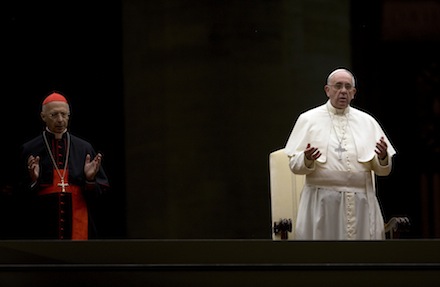
By Francis X Rocca on Sunday, 5 October 2014
Francis and Cardinal Angelo Bagnasco pray during the vigil (AP)
Pope Francis appealed for a "sincere, open and fraternal exchange of views" at the family synod at a prayer vigil in St Peter's Square hours before the long-awaited gathering began.
He prayed that the synod fathers would express themselves and listen to each other openly, trusting in God to reconcile their differences.
"Let us invoke openness to a sincere, open and fraternal exchange of views, that it might lead us to take pastoral responsibility for the questions that this changing time brings with it," the Pope said. "Let them fill our heart, without ever losing peace, but with serene trust that in his time the Lord will not fail to lead us back to unity.
"Doesn't the history of the Church perhaps tell us of so many analogous situations, that our fathers knew how to overcome with stubborn patience and creativity?" he said.
Pope Francis spoke in during prayer vigil for the synod, which will discuss a range of "pastoral challenges of the family" in preparation for a larger world synod in October 2015. The Pope is scheduled to open the synod with Mass in St Peter's Basilica on Sunday, October 5.
One of the most discussed topics at the synod promises to be the eligibility of divorced and civilly remarried Catholics to receive Communion.
By Church law, such Catholics are not admitted to Communion without an annulment of their first, sacramental marriage, unless they abstain from sexual relations with their new partners. Pope Francis has said the predicament of such Catholics exemplifies a general need for mercy in the church today.
A proposal by German Cardinal Walter Kasper to make it easier for people in such situations to receive Communion has met with public opposition from several prominent members of the synod, including the Vatican's doctrine and finance chiefs and the head of its highest court.
Pope Francis, who would make the final decision on any change, has not expressed his view, but he invited Cardinal Kasper to present his proposal at a gathering of the world's cardinals in February.
At the prayer vigil, the Pope spoke generally about the need for pastoral solutions suited to the present day.
"We must lend an ear to the rhythm of our time and perceive the odour of people today, that we might be imbued with their joys and hopes, their sadness and anxiety: at that point we will be able credibly to propose the good news on the family," he said.
Pope Francis has made a point of recognising sociological realities that conflict with Catholic teaching on the family, baptising a child whose parents had been married civilly and marrying couples who had cohabitated before their wedding.
In the spirit of such frankness, the vigil featured the spoken testimonies of three Italian families, including a couple with two children who were separated for six years before reuniting with help from Retrouvaille, a retreat program of Catholic origin. The husband, identified only as Nicola, recalled his infidelity in front of more than 40,000 people in the square, minutes before the arrival of the Pope.
Pope Francis emerged from the basilica shortly after 7pm, 15 minutes after sunset. Many in the congregation held candles as they listened to him contrast the pleasures of the family hearth with the suffering of the lonely in the "bitter twilight of broken dreams and projects", victims of an "individualistic culture that denatures and renders ephemeral the ties" among human beings.
"The family continues to be the unparalleled school of humanity, an indispensable contribution to a society of justice and solidarity," the Pope said. "And the deeper its roots, the farther out we are able to go, without getting lost or feeling estranged in any land."
He prayed that the synod fathers would express themselves and listen to each other openly, trusting in God to reconcile their differences.
"Let us invoke openness to a sincere, open and fraternal exchange of views, that it might lead us to take pastoral responsibility for the questions that this changing time brings with it," the Pope said. "Let them fill our heart, without ever losing peace, but with serene trust that in his time the Lord will not fail to lead us back to unity.
"Doesn't the history of the Church perhaps tell us of so many analogous situations, that our fathers knew how to overcome with stubborn patience and creativity?" he said.
Pope Francis spoke in during prayer vigil for the synod, which will discuss a range of "pastoral challenges of the family" in preparation for a larger world synod in October 2015. The Pope is scheduled to open the synod with Mass in St Peter's Basilica on Sunday, October 5.
One of the most discussed topics at the synod promises to be the eligibility of divorced and civilly remarried Catholics to receive Communion.
By Church law, such Catholics are not admitted to Communion without an annulment of their first, sacramental marriage, unless they abstain from sexual relations with their new partners. Pope Francis has said the predicament of such Catholics exemplifies a general need for mercy in the church today.
A proposal by German Cardinal Walter Kasper to make it easier for people in such situations to receive Communion has met with public opposition from several prominent members of the synod, including the Vatican's doctrine and finance chiefs and the head of its highest court.
Pope Francis, who would make the final decision on any change, has not expressed his view, but he invited Cardinal Kasper to present his proposal at a gathering of the world's cardinals in February.
At the prayer vigil, the Pope spoke generally about the need for pastoral solutions suited to the present day.
"We must lend an ear to the rhythm of our time and perceive the odour of people today, that we might be imbued with their joys and hopes, their sadness and anxiety: at that point we will be able credibly to propose the good news on the family," he said.
Pope Francis has made a point of recognising sociological realities that conflict with Catholic teaching on the family, baptising a child whose parents had been married civilly and marrying couples who had cohabitated before their wedding.
In the spirit of such frankness, the vigil featured the spoken testimonies of three Italian families, including a couple with two children who were separated for six years before reuniting with help from Retrouvaille, a retreat program of Catholic origin. The husband, identified only as Nicola, recalled his infidelity in front of more than 40,000 people in the square, minutes before the arrival of the Pope.
Pope Francis emerged from the basilica shortly after 7pm, 15 minutes after sunset. Many in the congregation held candles as they listened to him contrast the pleasures of the family hearth with the suffering of the lonely in the "bitter twilight of broken dreams and projects", victims of an "individualistic culture that denatures and renders ephemeral the ties" among human beings.
"The family continues to be the unparalleled school of humanity, an indispensable contribution to a society of justice and solidarity," the Pope said. "And the deeper its roots, the farther out we are able to go, without getting lost or feeling estranged in any land."
Saturday, October 4, 2014
The Plight of Iraqi Christians
The Iraqi Christian who told ISIS: 'If you want to kill me for my faith I am prepared to die here now'
John Pontifex blogs on the plight of Iraqi Christians
When Christian villagers from the Iraqi town of Caramles fled advancing IS forces, 80-year-old Victoria was among a dozen or so unable to leave. The widow, a Chaldean Catholic, knew nothing about the sudden evacuation that had suddenly emptied this ancient village she had known for so long. Next morning she went to church – St Addai's – as she did every day. She found the place locked; the streets deserted. She knew IS had come.
We met Victoria on our first evening in Erbil at the start of a fact-finding and project assessment trip for Catholic charity Aid to the Church in Need. She wanted to tell us the story of how she and her friend and neighbour Gazella survived.
For four days, they locked themselves in their home, not daring to venture out. "Prayer sustained us," said Victoria. But they needed food for the body as well as food for the soul and when supplies ran dangerously low they went in search of water and other basics.
Inevitably they ran into IS forces. Explaining their situation, they asked for help and to their surprise IS gave them water even after they refused a request to abandon their faith.
A few days later, IS found them in their homes and rounded them up at St Barbara's shrine just on the edge of Caramles. There were about a dozen of them there, the last remaining Christian inhabitants of the village.
"You must convert," IS forces told them. "Our faith can promise you paradise," they added.
Victoria and Gazella responded: "We believe that if we show love and kindness, forgiveness and mercy we can bring about the kingdom of God on earth as well as in heaven. Paradise is about love. If you want to kill us for our faith then we are prepared to die here and now."
IS forces had no answer. The dozen Christians, who included many elderly and infirm, were let go. One of them had a battered car. Other transport was also arranged and they made it to safety.
Victoria and Gazelle are still neighbours. But they no longer live in two homes side by side but two mattresses in a room they rent courtesy of the Church in Ainkawa, near Erbil, the capital of Kurdish northern Iraq.
There on the mattresses they told their story. Completing it, Victoria had tears in her eyes. "Ebony", she said, reaching out her arms to me.
After we embraced, her bishop, Amel Nona of Mosul, himself a refugee too, told me that "Ebony" is Arabic for "my child". I went away thinking that I was indeed a child sitting at the feet of women of great fortitude, faith and friendship.
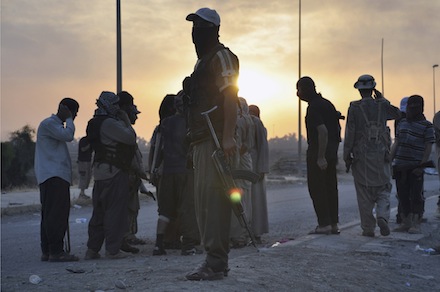
Islamic State fighters stand guard at a checkpoint in the northern Iraqi city of Mosul (CNS)
Friday, October 3, 2014
'Filming Desire' - by Claire Levis
Filming Desire by Claire Levis
Recently, I sat down to watch Desire of the Everlasting Hills, a newly released documentary about three Christians who pursued their attraction to members of the same sex but then—after diverse experiences and disappointments—embraced chastity and their erstwhile faith. One had pursued the New York fast life, another monogamous stability, and the third had attempted to eschew an Evangelical upbringing in response to his inclination toward men. The documentary was produced by Courage, the much-maligned ministry of the Roman Catholic Church that aids those with same-sex attractions who seek to live chastely.
The subjects, Rilene, Dan, and Paul, respond to the prompts of interviewers with apologies for being a little too honest, or slightly too graphic, but their candor lends the film its potency. Artfully focused bar shots, breathtaking vistas, and jangling cityscapes add texture as each story repeats the same refrain: Our hearts thirst, but what we consume cannot slake. One recounts sleeping with a thousand men, another reveals being consumed with materialism, and the third expresses a desire for stability and children. Rilene, Dan, and Paul describe their world-weariness and the peace they've found in Christ.
As they cried, overwhelmed by the confirmation of love and mercy poured out in the Eucharist, I could not hold back my own tears. These are not "gay issues"; these are human issues. Indeed, they were my own. At twenty-one I'd been drunk on sexual power, alcohol, and the quest for social affirmation, presuming God's mercy while living a double life. I was spiritually dead, unable to see the demolition of which I was both perpetrator and victim. It wasn't until I experienced sexual assault that my life came to a stand-still. I finally had to admit to myself that this chase had proven self-destructive and fruitless.
And so I tried something different: I tried to re-orient my desires to God. I pursued therapy and sobriety, but the best remedy was undeniably the outpouring of grace that came when I stepped into the confessional, knelt down, and uttered those beautiful words, "Bless me, Father, for I have sinned." Despite my presumptuousness, Christ met me in the Eucharist, opening me to His grace. He pursued my thoughts, quietly removing the corruption in my heart, immediately filling each spiritual cavity with Himself. Soon, I even began to no longer desire false things.
It seems that I am not alone in finding Rilene, Dan, and Paul's experience deeply relatable. "These stories are as richly textured as a nineteenth-century novel, suffused with hope and mystery, and told just about as well as I can imagine," writes Eve Tushnet for the American Conservative. She goes on to highlight the commonality of faithfulness within Christian diversity, saying, "I think this movie would challenge any Christian—no matter their church affiliation or views on sexual ethics. It shows the wild diversity within orthodoxy, the sheer weirdness and unpredictability of faithful Catholic lives." Faithfulness is the key. "If you care about the victims of the Lonely Revolution, you should see Desire of the Everlasting Hills," Anthony Esolen says in Crisis, after detailing how thirsty for Christ is our post-sexual revolution. Rod Dreher, writing for the American Conservative, distills the movie perfectly. He writes, "That's what startled me about the film: how it doesn't make plaster saints of these three, or make them fit into a neat, clean story line. All of them obey the teachings of the Church, and do so with a palpable sense of joy. It's very clear that they struggle, but what is so interesting about this is the paradoxical sense that this yoke is easy, the burden light, compared to the lives they had before." Indeed, the burden is almost forgotten in their experience of joy.
Desire of the Everlasting Hills initially appears to be made to show how those with same-sex attraction can embrace Christ and chastity. But, as Dan, Rilene, and Paul's stories flow, it becomes clear that the film's ambitions are much greater. It shows that these three individuals' struggles, fears, and triumphs are in no small measure our own. It reminds us of our shared humanity in emphasizing our basic human desire to love and be loved.
"What would younger Rilene think of Church Lady Rilene?" the interviewer asks. "Oh you know, all that church stuff," Rilene laughs. "That's just for people who are weak, people who can't get it together. People who are poor and sick and who can't manage their lives. True enough. Here I am." You and me both, Rilene.
Claire Levis writes from Philadelphia.
Become a fan of First Things on Facebook, subscribe to First Things via RSS, and follow First Things on Twitter.
Subscribe to:
Posts (Atom)