Search This Blog

Monday, May 16, 2016

CARMEL: ST. SIMON STOCK - Happy Feast day! :)

ST. SIMON STOCK, RELIGIOUS (M)

Saints
Feastday: Monday, May 16, 2016

As far as can be ascertained from the earliest references,
Simon Stock was an English Prior General, known for his holy way of life, who died about 1265 in Bordeaux in France. After his death, miracles were recorded by those visiting his tomb and during the 14th century a local cult developed in Bordeaux.

Around 1400, a separate legend emerged in the Low Countries of a "holy Simon" who had a vision of Our Lady, in which she appeared to him bearing the scapular and promised: "This is a privilege for you and your brethren: whoever dies wearing it, will be saved." Within a few years, the two accounts had been merged and Simon Stock, the Prior General, was credited with having the vision of Our Lady. The combined account quickly became elaborated with imaginary biographical details of Simon's life, such as his birth in Kent, his living for some years as a hermit in the trunk of a tree and his authorship of the Flos Carmeli, a beautiful Carmelite hymn to Our Lady (which is, in fact, found in the 14th century and hence predates the legend).

The cult of Saint Simon Stock and the scapular devotion spread rapidly throughout the 15th and 16th centuries and increasingly large numbers of lay persons were enroled in the scapular. Artists from all over the world have portrayed the scapular vision and examples are preserved in Carmelite churches throughout the Order. In the 16th century, the cult of Saint Simon Stock was made a part of the liturgical calendar for the whole Order, his feast being usually celebrated on 16th May. The feast was omitted in the recent reform of the liturgical calendar after Vatican II but has been now reintroduced.

Although the historicity of the scapular vision is rejected, the scapular itself has remained for all Carmelites a sign of Mary's motherly protection and as a personal commitment to follow Jesus in the footsteps of his Mother, the perfect model of all his disciples.
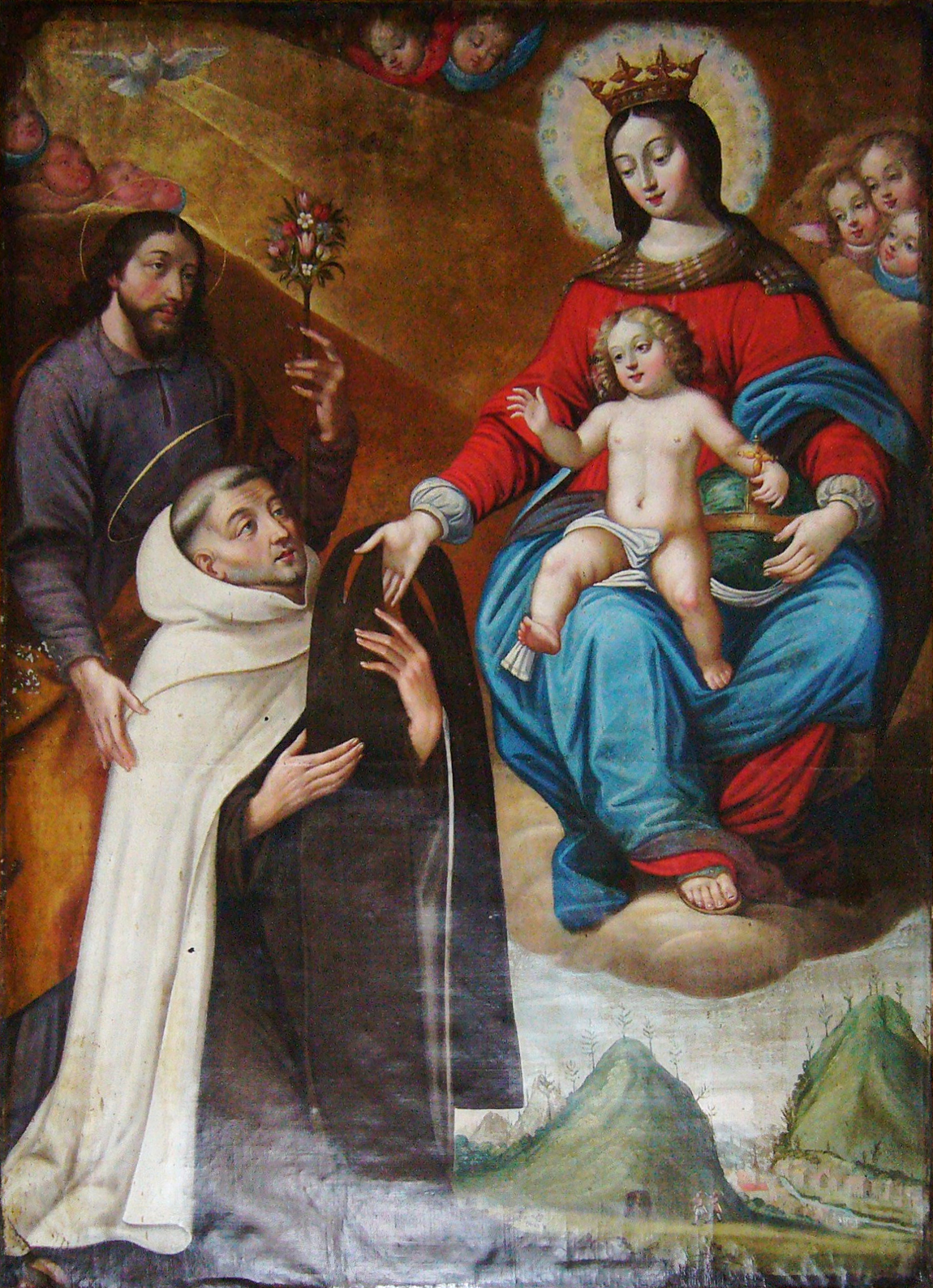
Sainte_Marie-aux-Minesd_016
Wikimedia Commons – Public Domain

Sunday, May 15, 2016

SOUTH KOREA - Cardinal Yeom: "May the compassion of Buddha be granted to our society"

SOUTH KOREA - Cardinal Yeom: "May the compassion of Buddha be granted to our society"


Seoul (Agenzia Fides) - "Our society is full of conflict and division. In this difficult moment, I pray that the mercy and compassion of Buddha can be granted in abundance to our society", said Cardinal Andrew Yeom Soo-jung, Archbishop of Seoul, in a message sent to the Buddhist community on the occasion of the 2560th anniversary of the birth of Buddha. The text of the message, sent to Agenzia Fides, says: "I pray that Jesus’ teaching of mercy and Buddha's teaching of love may be welcomed by all, and that our two religions can walk together on the path of truth, to enlighten the people and build a society of peace and well-being".
The Cardinal expressed "heartfelt congratulations for the 2560th anniversary of the birth of Buddha" and, representing the Korean Catholics, he says: "I hope that the abundant compassion and mercy of Buddha can be granted to each of you".
The Catholic Church in Korea (the faithful are about 10% of the population) has very good interfaith relations with leaders and Buddhists (22% of the Korean population). Cardinal Yeom and Venerable Jaseung, who heads the forum "Korean Bhussit Jogye", are used to exchanging greetings through messages on the occasion of Buddha's birth and Christian Christmas. There are also various activities and interreligious meetings. (PA) (Agenzia Fides 12/05/2016)

Terminally ill woman fulfils her dream to meet the Pope

Terminally ill woman fulfils her dream of a pilgrimage to meet the Pope
by Carol Glatz
posted Friday, 13 May 2016

Pope Francis embraces Cheryl Tobin, who has stage IV cancer, 
during his general audience at the Vatican 
(CNS photo/L'Osservatore Romano)
Cheryl Tobin, who has stage 4 cancer, said she was 'overwhelmed with emotion'

The military mantra of “suck it up” and an intense love for the Catholic faith drove Cheryl Tobin to reach new heights – the cupola of St Peter’s Basilica and a personal blessing from Pope Francis.

Despite having stage 4 cancer, undergoing chemotherapy and missing a section from both thigh muscles, Tobin travelled to Rome, climbed corkscrew staircases and did “the big wave” balanced on top of a plastic chair in order to catch the Pope’s attention.

“We were in the back of the crowd” at the Pope’s weekly general audience in St Peter’s Square, her husband, Jim Tobin, told Catholic News Service.

“I told her, ‘You need to stand up on the chair and suck it up.’ People were looking at me, like, ‘What a thing to say.’ And then I told her, ‘Don’t just wave. You’ve got to do the big wave.’ That’s when [the guards] pointed to her” to indicate she could come out from behind the barricades and meet the Pope.

“Everyone around us cheered. They only let her go up” to the Pope, Jim said.

Cheryl said the Pope held her hands and then blessed her head – bald from chemotherapy and misshapen from repeated skin grafts and operations to remove a tumour at the base of her skull.

She said she didn’t want to wear her wig because she wanted the Pope to see her like she was, but she did add some sparkle with a gold elastic hairband.

The Pope then warmly embraced her as Cheryl cried on his shoulder. “I started crying when I saw him. I was overwhelmed with emotion,” she said.

“Suck it up” is also what got Cheryl up the 200 marble steps to reach the top of St Peter’s dome, she said.

Like her husband, “I was in the army – a master sergeant,” airborne division, and “you just suck it up, and pull yourself up by your bootstraps” when facing any kind of hardship or challenge, she said.

An elevator took Cheryl and Jim most of the way up, but getting a bird’s-eye view of St. Peter’s Square required taking the stairs the rest of the way.

Extreme fatigue from treatments meant Cheryl used a wheelchair during most of the trip, but she steadied herself with her hands along the narrow spiral stairway, hoisting her way up, noticing many visitors around her complaining about the climb and getting discouraged.

“Then they saw her and got quiet,” Jim said.

Soon, Cheryl said, “we were like a group, pushing each other on” and cheering, “We’re almost there.”

(CNS photo/L’Osservatore Romano)
“My legs were like rubber,” she said, explaining that sections of her quadriceps had been removed to add muscle tissue to her face.

Cheryl’s pilgrimage began in 2015 when her name was picked from a random drawing of listeners of Lino Rulli’s “Catholic Guy” show on Sirius XM’s Catholic Channel. Only a few spots are available each year to join Rulli and other listeners on a pilgrimage to Rome and other cities in Italy.

But surgery and aggressive cancer treatments forced her to cancel that trip with an agreement to have a guaranteed spot on this year’s trip, she said. Radiation therapy again interfered with those plans, but Rulli organised a personalised itinerary that Cheryl could take on her own with her husband when she was between chemotherapy sessions this spring.

With her daughter’s urging, Cheryl had started a GoFundMe page to pay for the costs of the trip – reaching the bulk of her goal in 15 months. She also curates the “Cheryl Tobin’s Fight Against Cancer” page on Facebook chronicling her medical and faith journey.

“I’m not ashamed to show people what I’m going through,” she said, adding that people tell her that her posts are inspiring.

Cheryl said the Catholic Channel’s satellite radio programmes were instrumental to her joining the Catholic Church, because she had “always believed in God,” but her parents didn’t take her to church when she was growing up.

“I was always looking for something but never found it,” she said.

Living near Nashville in Clarksville, Tennessee, Cheryl said there were many Protestant and Evangelical Christian communities in that part of the “Bible belt,” but “every church believed in something different. If you don’t agree, you start your own church. So it never felt right.”

She said she started reading about the Catholic Church and “liked the structure,” the “set laws” in Church teaching, and the fact that the order of Mass is the same wherever you go so you always feel at home. “Mass is heaven on earth,” she said.

Rulli’s show had a particular impact on her, she said.

“I never felt good enough, not worthy enough, not perfect enough” to be welcomed by God, she said, “and that held me back.”

Cheryl Tobin and her husband Jim (CNS photo/Paul Haring)

But Rulli and his guests “were normal” with their humorous banter about life and frank talk about their struggles. Their being upfront about being imperfect helped Cheryl feel there was a place for her, too, in the Catholic Church, she said.

After she became a Catholic in 2010, it “seemed to be a load off her chest,” Jim said. It also marked the start of her dream to go to Rome someday.

When she was diagnosed with a rare form of cancer in 2013 at the age of 45, she tapped into her faith to pull her through and the Christian faith of her friends and co-workers in receiving prayers and blessings.

With her poor prognosis – from three to nine months to live – all of her doctors said, “‘Do what you enjoy.’ So we decided to come here” and “pray for a miracle,” Jim said.

Reliving her papal embrace from that morning, Cheryl said, “I’m relieved. I feel like no matter what happens I’ll be OK. It’s like not having any fear. It’s closure in a way.”

Friday, May 13, 2016

The Real Thing About Being a Hermit: Thomas Merton

The real thing about being a hermit is of course that a hermit is outside all categories whatever. The hermit who succeeds, or thinks he can succeed, in simply having a recognisable niche - a nest of his own that everyone can account for and understand - may well be lacking an essential element of solitude.  The hermit life is a kind of walking on water, in which one can no longer account for anything but one knows that one has not drowned and that this is to nobody's credit but God's. ...

From: Thomas Merton: I Have Seen what I was Looking for : Selected Spiritual Writings; p. 204; by Thomas Merton, M. Basil Pennington

Thursday, May 12, 2016

Pope: Missionaries are the heroes of evangelisation

Missionaries are the heroes of evangelisation, says Pope
by Catholic News Service
posted Wednesday, 11 May 2016

Christian missionaries with a Khasi tribal woman in Guwahati, India. (CNS photo/EPA)


Pope Francis said that young people who are fed up with materialism should consider becoming missionaries

Young women and men who are tired of today’s self-centred, materialistic society should consider becoming missionaries who are the heroes of evangelisation, Pope Francis has said.

“Life is worth living” to the full, “but in order to live it well, ‘consume’ it in service, in proclamation and keep going forward. This is the joy of proclaiming the Gospel,” the Pope said yesterday during the Mass in the chapel of the Domus Sanctae Marthae.

So many men and women have left their families, homeland and culture to bring the Gospel to other continents, he said. So many of them never returned home, dying in mission lands from disease or martyrdom – “offering their life for the Gospel. These missionaries are our joy, the joy of our church.”

Many missionaries are “anonymous,” having served and died in foreign lands, he said. “They ‘consumed’ life,” far from home and their loved ones, but lived knowing they could say, “what I have done was worth it.”

Open to the work of the Holy Spirit, they felt an irresistible urge – they were “compelled” – to “consume their lives” for God in the farthest corners of the earth, the Pope said.

“I want to tell today’s young men and women, who do not feel at ease” or happy with “this culture of consumerism and narcissism, ‘Look at the horizon. Look over there. Look at these missionaries of ours,'” he said.

Pope Francis asked those dissatisfied with worldly pursuits to pray to the Holy Spirit “to compel them to go far, to ‘consume’ their life” by being fully dedicated to serving others and the Gospel.

Pope Francis invokes St. John Paul II: Fatima feast

Pope Francis invokes St. John Paul II ahead of Fatima feast

2016-05-11 Vatican Radio

(Vatican Radio) Pope Francis on Wednesday said Our Lady of Fatima “invites us once again to turn to prayer, penance, and conversion.”

The Holy Father noted the Feast of Our Lady of Fatima is commemorated this year on this Friday (13 May) during his remarks to Polish-speaking pilgrims at his General Audience.

“She asks us to never offend God again. She forewarns all humanity about the necessity of abandoning oneself to God, the source of love and mercy,” Pope Francis said.

“Following the example of St. John Paul II, a great devotee of Our Lady of Fatima, let us listen attentively to the Mother of God and ask for peace for the world,” – he continued – “Praised be Jesus Christ!”

Thirty-five years ago, Pope St. John Paul II was shot by Mehmet Ali Ağca during the General Audience, which took place on the Feast of Our Lady of Fatima in 1981.

The saint attributed his survival to Our Lady, and gave one of the bullets used in the attack to the Shrine of Our Lady of Fatima in Portugal. The bullet was placed in the crown of the statue of the Virgin Mary which is housed at the shrine.(from Vatican Radio)

Tuesday, April 19, 2016

13 May - Our Lady of the Blessed Sacrament

Our Lady of the Blessed Sacrament

This title penetrates the mystery itself of the Eucharist, and when well understood, manifests to us the most important part granted to Mary in the economy of the Holy Eucharist.

If we have thoroughly seized Pierre Eymard's thought we understand that she is, first, the Mother of Jesus, giving to the Word her most pure blood, which was changed on the day of the Incarnation into His own Body, into His own Blood, in order to consecrate it later, on the night of the Last Supper, into His Sacrament of Love.

Our Lady of the Blessed Sacrament is Mary receiving in quality of universal dispensatrix of grace, the full and absolute disposition of the Eucharist and the graces that It contains, because this Sacrament is the most efficacious means of salvation, the fruit par excellence of the Redemption of Jesus Christ. To her, consequently, it belongs to make Jesus in the Sacrament known and loved; to her it belongs to spread the Eucharist throughout the world, to multiply churches, to raise them in infidel lands, and to defend faith in the Eucharist against heretics and the impious; to her it belongs to prepare souls for Communion, to rouse them to make frequent visits to Jesus, and to assist zealously at the Holy Sacrifice of the Mass. She is the treasure-house of all the graces comprised in the Eucharist, both those that prepare the soul for It and those that flow from It.

— Month of Our Lady of the Blessed Sacrament by St. Peter Julian Eymard

From: https://www.catholicculture.org/culture/liturgicalyear/calendar/day.cfm?date=2016-05-13

Sunday, April 17, 2016

Pope speaks of Christian woman killed for faith

Pope Francis speaks of Christian woman killed for her faith

Pope Francis leaves after celebrating a Mass 
in St. Peter's Basilica at the Vatican, Sunday, 
April 17, 2016. Pope Francis ordained eleven 
new priests Sunday. (AP / Alessandra Tarantino)
The Associated Press, Published Sunday, 
April 17, 2016 8:52AM EDT

VATICAN CITY - Pope Francis says one of the refugees he met on the Greek island of Lesbos was the Muslim widower of a Syrian Christian woman killed by extremists for refusing to renounce her faith.

Francis told the faithful in St. Peter's Square on Sunday that "she is a martyr."

Departing from his prepared remarks, Francis shared his experiences of the day earlier with thousands of people gathered for his blessing. He says among the 300 refugees he greeted Saturday on Lesbos was a Syrian widower with two children.

The pope said: "He is Muslim, and he told me that he married a Christian girl. They loved each other and respected each other. But unfortunately the young woman's throat was slashed by terrorists because she didn't want to deny Christ and abandon her faith."

Thursday, April 7, 2016

Best way for Catholics to mark the Reformation; Celebrate the papacy!

The best way for Catholics to mark the Reformation is to celebrate the papacy
by Fr Alexander Lucie-Smith
posted Friday, 1 Apr 2016

The Pope Emeritus prepares to greet Pope Francis during the 
opening of the Holy Door of St Peter's Basilica 
(CNS photo/Stefano Spaziani, pool)

The splintering of Protestantism is the best advert for a pope ever devised

The reminder from the ever excellent Cardinal Müller that the Reformation is nothing to celebrate, while a statement of the obvious – after all, how can one celebrate disunity? – still leaves us with a question: just how are we to mark the 500th anniversary of Martin Luther’s revolt against Church doctrine?

Just ignoring it would not be right. The Reformation was a huge event and we are still living with its consequences, no one can deny. Much better that we should mark the anniversary in a way that deepens our understanding of it. Why did it happen? What can we learn from it? And what can we do, five centuries on, to heal the breaches created then?

The usual answer to the first question is that the Reformation came about as a movement of reform, as a specific reaction to the corruption of the Catholic Church. I doubt, though, that any serious historian could assert this today, or find any compelling evidence to back up this myth. If we look at the German lands, there is plenty of evidence that the Catholic Church was in many ways still a vital body. Indeed, the proof of this is that half of Germany did not follow Luther: the Catholic Church still retained much credibility. Again, in England, the advanced decay of the pre-Reformation Church, and in particular its monasteries, is a myth. The Tudor Church boasted men like John Fisher and Thomas More, and its monasteries were seized as part of the biggest landgrab in history, rather than for moral reasons. Many of the monks died for the faith, which is hardly a sign that the monasteries had failed as religious institutions.

So why did the Reformation come about? It was partly a political movement: the German princes and Henry VIII arrogating powers to themselves; a nationalist movement, anti-Roman and anti-Spanish, both in Germany and England; and of course a religious movement too. It has to be admitted that Luther asked questions to which the Catholic answer was judged by many to be no longer adequate. And the chief of these questions was: “How can I be saved?”

All this leads to a huge contemporary problem. How are we to mark the anniversary of the Reformation when the question about salvation is no longer at the forefront of the modern consciousness? As far as I can see, even in the traditional lands of the Reformation, no one is exactly agonising over the question of salvation. Indeed, in hugely advanced societies like Sweden, which the Pope will be visiting to mark the anniversary, the general feeling seems to be that one does not need salvation through Christ or anyone else for that matter. Religious statistics are notoriously unreliable, but it seems pretty obvious that Sweden is one of the least religious countries on earth. Luther would be horrified!

Given that the “How can I be saved?” question is not the one on everyone’s lips, there is a danger that the Reformation anniversary will turn out to be a celebration of its political aspects. Luther is, let us not forget, a German national hero. As for England, the other day I met an MP (let him be nameless) who told me that in supporting Brexit, he was simply aiming to do what Henry VIII and Cranmer did, taking back sovereignty from a foreign power. Actually, he is right: the Act in Restraint of Appeals, which separated England from Rome, contains the famous line “This England is an Empire”, meaning that England was sovereign and not subject to any other powers such as the papal one. Just as Luther is a hero in Germany, Henry VIII is to many here, still.

What then is to be done? I think the best way to mark the Reformation is to emphasise that the Church can only be universal, that is Catholic, in that Christ only brought one revelation, and only founded one Church. The idea of a national church is completely absurd. Coupled with this there needs to be a strong presupposition in favour of internationalism (which, as my Brexiteer MP and I agreed, was quite in keeping with leaving the EU, as that institution is not to be confused with Europe itself).

Finally, I think we need to make the Reformation anniversary into a celebration of the role and nature of the papacy as the focus of unity and guarantor of doctrinal truth, for the splintering of Protestantism (of which Luther would not have approved, I feel) is the best advert for the papacy ever devised. Instead of asking the question “How can I be saved?” we need to turn our attention to the question “What is the Church?”

Relics found in ruined Syrian monastery confirmed as St Elian’s

Relics found in ruined Syrian monastery confirmed as St Elian’s
by Catholic News Service
posted Wednesday, 6 Apr 2016

A Syrian soldier surveys damages at 
Mar Elian monastery in Qaryatain, (AP Photo)

The relics were discovered amid the rubble of the desecrated Mar Elian Church in Qaryatain


It has been confirmed that the relics of Syrian St Elian, which originally were thought to have been destroyed by members of the Islamic State militia, have been found amid the rubble of the desecrated Mar Elian Church in Qaryatain, Syria.

The sanctuary was bulldozed in August 2015, according to Fides, the news agency of the Congregation for the Evangelisation of Peoples.

Fr Jacques Mourad, the prior of the Syriac Catholic monastic community, was kidnapped three months earlier when the terrorists initially raided the church.

Fr Mourad, who was freed on October 11, reported the discovery of the relics to Fides on April 5.

“The fact that the relics of Mar Elian are not lost is for me a great sign: It means that he did not want to leave the monastery and the Holy Land,” the priest said.

The relics of St Elian, a third-century martyr, were discovered after Syrian military forces had retaken control of Qaryatain.

Even while the Islamic State forces controlled the area, however, local Christians preserved their veneration of St. Elian, Fides said.

Fr Mourad had told his flock: “It is not important that the monastery is destroyed, it is not even important that the tomb was destroyed. The important thing is that you bear Mar Elian in your heart, wherever you go, even in Canada, or Europe, because he wants to stay in the hearts of his followers.”

A priest of the Syriac Catholic Archdiocese of Homs and monks from the Mar Musa monastery were set to go to Mar Elian to survey its condition, Fides reported.

Fr Mourad asked that they collect and guard the remains.

“We know that the old sanctuary was destroyed, the archaeological site was devastated, while the new church and monastery were burned and partly bombed,” he said. “The life of grace will bloom again around the memory of the saints. It will be a great blessing for our entire church.”