Search This Blog

Thursday, July 28, 2011

'Jesus' Incarnation and Presence in the Eucharist' - Benedict XVI


Pope Benedict - Jesus' Incarnation and Presence in the Eucharist confounds the wisdom of men
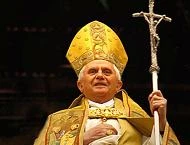
.- Christ's incarnation and presence in the Eucharist "puts into crisis the wisdom of men".  So the Pope spoke this past Thursday, at 7 p.m., on the Solemnity of the Body and Blood of Christ (Corpus Christi). 
To mark the feast, Benedict XVI celebrated Mass in the Basilica of St. John Lateran, and afterwards presided over a Eucharistic Procession from St. John's Basilica until the Basilica of Saint Mary Major.  The Pope greeted the Romans gathered there, together with the Cardinal Vicar of Rome, Mons. Camillo Ruini, and other cardinals and bishops present at the celebration.

During the homily, the Pope said: "a moment ago, we have sung in the Sequence: It is certain for us Christians, / that the bread becomes flesh, / the wine becomes blood'.  Today we affirm with enthusiasm our faith in the Eucharist, the Mystery which constitutes the heart of the Church." It is also, "the gift which Jesus Christ makes of himself, revealing to us the infinite love of God for every man."
Making reference to the counter-Reformation, the Pope noted that the feast has its origins in the desire of the people to reaffirm their belief in the real presence of Jesus Christ in the Eucharist.  The purpose of the feast, he said, is "to adore, praise, and thank publicly the Lord, who 'in the eucharistic Sacrament continues to love us 'until the end', to the point of giving his body and his blood.'" The Apostles received the gift of the Eucharist from the Lord in the intimacy of the Last Supper, but the gift was intended for everyone, for the whole world.
Linking Thursday's celebration with the heightened spiritual tension of the last days of Lent, the Holy Father commented: "This evening's Eucharistic celebration leads us back to the spiritual climate of Holy Thursday, the day in which Christ, on the eve of his Passion, instituted in the Cenacle the most holy Eucharist.  The feast of Corpus Domini constitutes in this way a taking up of the mystery of Holy Thursday, as if in obedience to the invitation of Jesus to 'proclaim from the rooftops' what He has said in secret (cf. Mt 10:27)."
As he prepared to begin the Solemn Procession, the Pope declared, "This is why [the Eucharist] is proclaimed and exposed openly, so that everyone may encounter "Jesus who passes" as he passed through the roads of Galilee, of Samaria and of Judea; so that everyone, in receiving him, may be healed and renewed by the strength of his love." 
Calling the assembly's attention to the miracle of the Eucharist, Benedict XVI noted that "when the priest proclaims after the consecration, 'This is the Mystery of our faith!' he proclaims the mystery just celebrated, and manifests his stupor in front of the substantial conversion of the bread and wine into the body and blood of the Lord Jesus, a reality which surpasses all human understanding."
Noting the disbelief today of many Christians in the real Presence of Our Lord, the Holy Father explained: "Precisely because we are dealing with a mysterious reality which surpasses our comprehension, we should not be amazed if even today many find it difficult to accept the real presence of Christ in the Eucharist.  It could not have been otherwise…Today, just as back then, the Eucharist remains a 'sign of contradiction' … because a God who becomes flesh and sacrifices himself for the life of the world puts into crisis the wisdom of men."
Besides an incredible miracle, the Eucharist is nourishment: "The Eucharist is 'the bread of pilgrims'… the food which sustains them on their long exodus journey throughout the desert of human existence."  The Holy Father remarked that this world is like a 'desert', 'dried up by ideological and economic systems which do not promote life, but instead put it to death; a world where the logic of power and of having dominate, rather than that of service and of love
As an antidote and answer to the culture of death, the Pope noted that the procession would be made "as if to bring ideally the Lord Jesus through all the streets and neighbourhoods of Rome.  We will immerse Him, so to speak, in the ordinariness of our life, so that He may walk where we walk, so that He may live where we live."

CHURCH: Tomb of St. Philip discovered in Turkey

Tomb of St. Philip said to be discovered in Turkey


HIERAPOLIS, TURKEY (Fox News) – A tomb believed to be that of St. Philip the Apostle was unearthed during excavations in the ancient Turkish city of Hierapolis.

Italian professor Francesco D'Andria said archeologists found the tomb of the biblical figure -- one of the 12 original disciples of Jesus -- while working on the ruins of a newly-unearthed church, Turkish news agency Anadolu reported Wednesday.

"We have been looking for Saint Philip's tomb for years," d'Andria told the agency. "We finally found it in the ruins of a church which we excavated a month ago."

The structure of the tomb and the writings on the wall proved it belonged to St. Philip, he added.

The professor said the archaeologists worked for years to find the tomb and he expected it to become an important Christian pilgrimage destination.

St. Philip, recognized as one of Christianity's martyrs, is thought to have died in Hierapolis, in the southwest province of Denizli, in around 80AD. It is believed he was crucified upside down or beheaded.

Hierapolis, whose name means "sacred city," is an ancient city famous for its hot springs and a spa since the 2nd century.

The Turkish news agency notes a wealth of current archaeology projects underway in the country, which has seen a potpourri of cultures over the centuries: Assyrians, Phrygians, Persians, Romans, Byzantinians, Ottomans and more.

FAITH: Pierre Claverie, OP martyr of Algeria

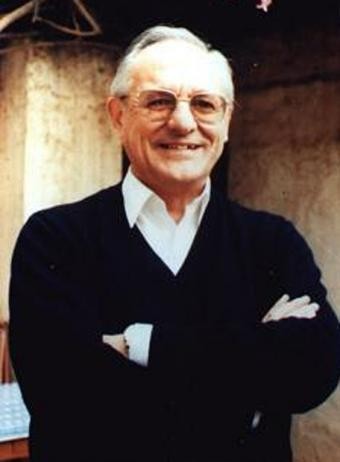
Pierre Claverie O.P.,1938 to 1996


Catholic Church
Algeria

Pierre Claverie, Catholic Bishop of Oran and protagonist of Islamo-Christian dialogue, was assassinated by Islamic militants in a booby trap explosion at the entrance to his house. His young Algerian driver, Mohammed Bouchikhi, died with him and the mingling of their blood was seen by many as a symbol of the bishop's desire to find a home in the hearts of the Algerian people and to participate in their sufferings.

Claverie was born in Algiers in 1938, the child of French settlers, or pieds noirs ("black feet"). He had a happy childhood in a loving family but had no contact with the Arab Muslims among whom they lived. As a teenager, he joined a scout troop run by Dominican priests (Order of Preachers). After his schooling at a lycée in Algiers, he went to the University of Grenoble in France in 1957 to study mathematics, physics, and chemistry, at the very moment when the future of the French colony hung in the balance. At first he joined a group of right-wing student activists from Algeria, protesting against the Catholic left and burning their newspapers, but gradually he began to see his opponents' point of view and to condemn the atrocities of the guerrilla OAS (Secret Organization of the Army) in the land of his birth.

After two years at Grenoble, he joined the novitiate of the Order of Preachers near Lille, and came under the influence of the celebrated Dominican theologians Chenu and Congar. He continued his studies for the priesthhood at Le Saulchoir, where he made his profession, and then returned to Algiers for non-combatant military service. After the failed coup d'état by elements of the French Army and the OAS in 1961, the French withdrew and Algeria obtained its independence in the following year. Claverie went back to France and continued his theological studies at Le Saulchoir, being ordained priest in 1965.

Claverie returned to the new Algeria in 1967 and at once set about learning Arabic with the Lebanese Sisters of the Sacred Hearts at their Arabic Pedagogical Institute. He soon became fluent in the language and spoke it with a good accent. At the same time he began to explore links with Algerians and with Islam. Popular Islam in Algeria had been Sufist, but new Sunni teachers from Egypt and Saudi Arabia were installing a more orthodox form of religion and campaigning against non-Arab traditions such as those of the Kabyles and other Berbers. This created a powerful movement of reformist or fundamentalist Islam.

Claverie lectured at the Diocesan Institute of the rue des Glycines, succeeding his friend Henri Teissier as director, and forming lasting friendships with Algerians of all classes. His friend Pastor Jacques Blanc introduced him to the World Council of Churches Association Encounter and Development, of which he eventually became the director. Claverie resisted attempts to appoint him to the Dominican Islamic Institute in Cairo or even to study at the Pontifical Arab and Islamic Institute in Rome, run by the Missionaries of Africa. His overriding aim was to remain in, and identify with, Algeria.

When Henri Teissier was appointed Coadjutor of Algiers, Claverie succeeded him as bishop of Oran in 1981. The homily he preached in Arabic and French at his Episcopal ordination was a manifesto for Christians in Algeria as a minority in the "House of Islam," stressing the need for mutual respect and tolerance, while eschewing all forms of aggressive evangelism or fanaticism. Almost his first acts as bishop were to donate a church to be a mosque and to turn his cathedral into a cultural centre, where his Muslim friends gave lectures and conferences. He also struck up a life-long friendship with the Methodist pastor David Butler.

As bishop, Claverie was first and foremost a preacher, undertaking speaking engagements, giving retreats, taking part in discussions, and composing the editorials of his diocesan magazine. He was not afraid to speak his mind, but was happy to be contradicted. People were attracted by his human warmth, his gift of relationship, and the solidity and clarity of his ideas. These characteristics were underpinned by a simple, religious style of life, and a deep concentration in prayer.

Following the teaching of the Second Vatican Council, Claverie developed an original approach to Islamo-Christian dialogue. While Algeria was in the process of becoming more and more polemical, he abandoned "conference dialogue" and called for exchanges of mutual confidence in a dialogue of life. He aimed to respect consciences and to listen to the Holy Spirit speaking outside the visible church. In 1987 Claverie was appointed to the Pontifical Council for Interreligious Dialogue, continuing his search for a "dialogical Islam." Dialogue meant sincerely accepting the difference of others without compromising essentials. Later, he helped draw up the Council's document Dialogue and Proclamation, which envisaged a place for Islam in the economy of salvation, a faith leading to the true God.

Against a background of growing intolerance in Algeria, Claverie was invited to propound these ideas at the Paris Mosque in 1988. This celebrated conference in Arabic and French began by lamenting the legacy of polemic and exclusion shared by Christians and Muslims alike. The speaker then emphasized the importance of contacts and exchanges, the need to recognize the other as a responsible and free subject and the necessity of creating a climate of confidence and friendship, while effectively confronting differences. It was an eloquent appeal for reciprocity as a condition of dialogue.

In 1987 Claverie launched his application for Algerian citizenship. Although this had not been finalized by the time of his death nine years later, the bishop found his home more and more in the hearts of Algerian people, and less and less in the lands, buildings, and institutions of the church. In Algeria the Catholic Church was being pushed more and more to the margins, being divested of its social position. Christians were evicted from posts of responsibility and church personnel were now almost wholly at the service of Algerian institutions and the Algerian poor. The Arabo-Muslim character of the country was stressed and Christian missionaries who stayed were those who really wanted to do so. Claverie had no regret for the church's loss of influence. The church, like its founder, must give its life for others. Although his flock was increasingly made up of foreign oil workers and students, Claverie insisted that it was not a church of marginal people. It had to be integrated within the Algerian context.

Meanwhile, the Front for Islamic Salvation (FIS) was igniting a social and Islamic revolution against the FLN (Front for National Liberation) government and the ruling classes, grown wealthy on petro-dollars. With the victory of the FIS in the multi-party, municipal elections of 1991 and the cancellation of its general election victory by the army in the following year, the stage was set for civil war. Claverie condemned the military take-over and sympathized with the social aims of the FIS. However, the Islamists, following the example of the OAS, attempted to take power by force, through armed commando groups trained in Afghanistan. The Assassination of President Boudiaf in 1992 was followed by the murder of intellectuals, writers, and artists. It was not long before the escalating violence engulfed the church. Claverie condemned the violence and welcomed the Algerian youth who became secret Christians in reaction to Muslim extremism.

In 1994 Claverie attended the Special Assembly for Africa of the Synod of Bishops in Rome, but the year also witnessed the assassination of four Missionaries of Africa and four other religious in Algeria. Claverie denounced the cowardice of the murderers but declared that Christians in Algeria were in the right place -- at the foot of the Cross, along the "fracture lines" of Algerian society. In 1995 the misguided attempt of the Community of Saint Egidio in Rome to broker peace between Muslims in Algeria, led to a serious misunderstanding with the Algerian government. The Algerian bishops, who had not been consulted about this initiative, were torn between their loyalty to the government and their desire for peace. Three more religious sisters were assassinated at the end of the year and then in 1996 the seven Trappist monks of Tibhirine. Claverie took comfort from the poem of Hawa Djabali, composed in honour of the Christian martyrs. "They stayed and we asked why. There was no answer. It was a long fidelity…" He took even more comfort from Dietrich Bonhoeffer's heroic fidelity to the Kingdom at the end of the Second World War. Bonhoeffer had written, Claverie recalled, "The Kingdom comes for us in our death."

Claverie took precautions for his own security, but was spiritually well prepared for the end when it came on August 1, 1996. As a Muslim friend (Redouane Rahal) said of him: "Algeria, which saw the birth of Saint Augustine and Sheikh Ben Badis, is honoured to have sired a Pierre Claverie. For them and for him it was the same journey in the fight for justice and the respect for others in their difference."

Aylward Shorter M.Afr.


Sources:

Pérennès, Jean-Jacques, Pierre Claverie. Un Algérien par Alliance, Paris: Editions du Cerf, 2000.
Duval, Armand, C'était une Longue Fidélité, Paris: Mediaspaul, 1998.


This article, submitted in 2003, was researched and written by Dr. Aylward Shorter M.Afr., Emeritus Principal of Tangaza College Nairobi, Catholic University of Eastern Africa.


Wednesday, July 27, 2011

CAMBODIA: 48% of Christians killed during Khmer Rouge reign

Catholics in Cambodia's 'killing fields' of 1970sRSSFacebookJuly 27, 2011

The appalling genocidal killings under the Lon Nol regime in Cambodia in the 1970s took a disproportionately heavy toll on the country's Catholic minority, writes George Marlin for The Catholic Thing.

Catholics accounted for only about 4% of Cambodia's population when the murderous regime took power. But because they were concentrated in the nation's cities, where the bloodshed was most intense, their suffering was acute. Nearly half of Cambodia's Catholics were killed.

Source(s): these links will take you to other sites, in a new window.

Tuesday, July 26, 2011

Sts. Joachim and Ann

From a sermon by Saint John Damascene, bishop
By their fruits you will know them


Ann was to be the mother of the Virgin Mother of God, and hence nature did not dare to anticipate the flowering of grace. Thus nature remained sterile, until grace produced its fruit. For she who was to be born had to be a first born daughter, since she would be the mother of the first-born of all creation, in whom all things are held together.

Joachim and Ann, how blessed a couple! All creation is indebted to you. For at your hands the Creator was offered a gift excelling all other gifts: a chaste mother, who alone was worthy of him.

And so rejoice, Ann, that you were sterile and have not borne children; break forth into shouts, you who have not given birth. Rejoice, Joachim, because from your daughter a child is born for us, a son is given us, whose name is Messenger of great counsel and universal salvation, mighty God. For this child is God.

Joachim and Ann, how blessed and spotless a couple! You will be known by the fruit you have borne, as the Lord says: By their fruits you will know them. The conduct of your life pleased God and was worthy of your daughter. For by the chaste and holy life you led together, you have fashioned a jewel of virginity: she who remained a virgin before, during and after giving birth. She alone for all time would maintain her virginity in mind and soul as well as in body.

Joachim and Ann, how chaste a couple! While safeguarding the chastity prescribed by the law of nature, you achieved with God's help something which transcends nature in giving the world the Virgin Mother of God as your daughter. While leading a devout and holy life in your human nature, you gave birth to a daughter nobler than the angels, whose queen she now is. Girl of utter beauty and delight, daughter of Adam and mother of God, blessed the loins and blessed the womb from which you come! Blessed the arms that carried you, and blessed your parents' lips, which you were allowed to cover with chaste kisses, ever maintaining your virginity. Rejoice in God, all the earth. Sing, exult and sing hymns. Raise your voice, raise it and not be afraid.

Cardinal Zen: the absurdity of an atheist government that wants to lead the Catholic Church
by Card. Joseph Zen Zekiun, sdb
The retired bishop of Hong Kong comments on the recent statement by the Office of Religious Affairs. Non-believing authorities want to lead evangelization and pastoral care. They want to create a schism, they need to find a Luther or Henry VIII. But the harsh winter will end.

Hong Kong (AsiaNews) - These last few days, Catholic faithful inside and outside China have noted with sadness and indignation words pronounced by Mr. Liu bainian, Rev. Guo Jinchai, Rev. Fan xxxx and Rev. Yang yu, which are hardly distinguishable from being schismatic. But today's statement by the Religious Affairs Bureau has reached the extreme of absurdity.

We may understand if the government come out to defend their puppets by saying that they are politically correct, or to praise their courage in resisting foreign pressure; but now they come out to praise their "ardent catholic faith", and to say that the ordinations without papal mandate are necessary for "the normal running of the Church and for the needs of pastoral and evangelizing activity". This is absolutely preposterous and ridiculous! As recently some scholars have pointed out, the government now is "running" the Catholic Church.

Are they blind? Have they not had chance to see how the Catholic Church works in the rest of the world? Does the special situation of China force the government to run a Church which simply can no more be recognizable as catholic? They are making themselves the laughing stock of the world!

Can our leaders take out some time from their engagement in power struggle and give attention to this "tiny community" of catholics? Why our brother and sister should not be allowed to live peacefully their normal life of faith? Is it not that a right given them by the Constitution?

They call the excommunication by the Holy See in the fifties "cause" and the illegitimate ordination of bishops "effect", they are shamelessly twisting the reality.

From the recent 3 illegitimate ordinations and the 8th Assembly, everybody could understand that the Religious Affairs Bureau and the Patriotic Association have decided to lead the open Church to go unrepentant their way of an independent church and to unilaterally elect and ordain their bishops. Then let them find someone with enough weight like Martin Luther and Henry VIII, to give a status to their new church, but they have no right to usurp the name of "Catholic Church".

With violence they limited personnel freedoms, they even offended the dignity of conscience, they completely disreguarded the authority and the kindness of our Holy Father, and still they dare to say that they have sincere will of dialogue, that is the biggest lie in the world! Only the self interests and the cowardice of the nations prevent they from saying a fair word of disapproval.

The saying goes: "the eyes of the people are illumined". In Leshan some people may admire the administrative efficiency of Rev. 雷 , but they must know that he is unfit to be a bishop; in Shantou there may be people supporting the ambitions of Fr. 黃; but the generality of the Catholic faithful in China will reject these "opportunists", and will always be on the side of the Pope.

Nobody knows how long the severe winter will last, but our faithful are not afraid, or they will overcome their fear with faith and prayer, which will give them strength to imitate the canonized martyrs and innumerable living heroes of faith, to give courageous testimony to our Risen Saviour.

Dear faithful brother and sister, we salute you! 

From an old brother who is almost ashamed of living in freedom. 
Cardinal Zen

Monday, July 25, 2011

EUCHARIST

The Real Presence


The doctrine of the Real Presence asserts that in the Holy Eucharist, Jesus is literally and wholly present—body and blood, soul and divinity—under the appearances of bread and wine. Evangelicals and Fundamentalists frequently attack this doctrine as "unbiblical," but the Bible is forthright in declaring it (cf. 1 Cor. 10:16–17, 11:23–29; and, most forcefully, John 6:32–71). 

The early Church Fathers interpreted these passages literally. In summarizing the early Fathers' teachings on Christ's Real Presence, renowned Protestant historian of the early Church J. N. D. Kelly, writes: "Eucharistic teaching, it should be understood at the outset, was in general unquestioningly realist, i.e., the consecrated bread and wine were taken to be, and were treated and designated as, the Savior's body and blood" (Early Christian Doctrines, 440). 

From the Church's early days, the Fathers referred to Christ's presence in the Eucharist. Kelly writes: "Ignatius roundly declares that . . . [t]he bread is the flesh of Jesus, the cup his blood. Clearly he intends this realism to be taken strictly, for he makes it the basis of his argument against the Docetists' denial of the reality of Christ's body. . . . Irenaeus teaches that the bread and wine are really the Lord's body and blood. His witness is, indeed, all the more impressive because he produces it quite incidentally while refuting the Gnostic and Docetic rejection of the Lord's real humanity" (ibid., 197–98). 

"Hippolytus speaks of 'the body and the blood' through which the Church is saved, and Tertullian regularly describes the bread as 'the Lord's body.' The converted pagan, he remarks, 'feeds on the richness of the Lord's body, that is, on the Eucharist.' The realism of his theology comes to light in the argument, based on the intimate relation of body and soul, that just as in baptism the body is washed with water so that the soul may be cleansed, so in the Eucharist 'the flesh feeds upon Christ's body and blood so that the soul may be filled with God.' Clearly his assumption is that the Savior's body and blood are as real as the baptismal water. Cyprian's attitude is similar. Lapsed Christians who claim communion without doing penance, he declares, 'do violence to his body and blood, a sin more heinous against the Lord with their hands and mouths than when they denied him.' Later he expatiates on the terrifying consequences of profaning the sacrament, and the stories he tells confirm that he took the Real Presence literally" (ibid., 211–12). 


Ignatius of Antioch


"I have no taste for corruptible food nor for the pleasures of this life. I desire the bread of God, which is the flesh of Jesus Christ, who was of the seed of David; and for drink I desire his blood, which is love incorruptible" (Letter to the Romans 7:3 [A.D. 110]). 

"Take note of those who hold heterodox opinions on the grace of Jesus Christ which has come to us, and see how contrary their opinions are to the mind of God. . . . They abstain from the Eucharist and from prayer because they do not confess that the Eucharist is the flesh of our Savior Jesus Christ, flesh which suffered for our sins and which that Father, in his goodness, raised up again. They who deny the gift of God are perishing in their disputes" (Letter to the Smyrnaeans 6:2–7:1 [A.D. 110]). 


Justin Martyr


"We call this food Eucharist, and no one else is permitted to partake of it, except one who believes our teaching to be true and who has been washed in the washing which is for the remission of sins and for regeneration [i.e., has received baptism] and is thereby living as Christ enjoined. For not as common bread nor common drink do we receive these; but since Jesus Christ our Savior was made incarnate by the word of God and had both flesh and blood for our salvation, so too, as we have been taught, the food which has been made into the Eucharist by the Eucharistic prayer set down by him, and by the change of which our blood and flesh is nurtured, is both the flesh and the blood of that incarnated Jesus" (First Apology 66 [A.D. 151]). 


Irenaeus


"If the Lord were from other than the Father, how could he rightly take bread, which is of the same creation as our own, and confess it to be his body and affirm that the mixture in the cup is his blood?" (Against Heresies 4:33–32 [A.D. 189]). 

"He has declared the cup, a part of creation, to be his own blood, from which he causes our blood to flow; and the bread, a part of creation, he has established as his own body, from which he gives increase unto our bodies. When, therefore, the mixed cup [wine and water] and the baked bread receives the Word of God and becomes the Eucharist, the body of Christ, and from these the substance of our flesh is increased and supported, how can they say that the flesh is not capable of receiving the gift of God, which is eternal life—flesh which is nourished by the body and blood of the Lord, and is in fact a member of him?" (ibid., 5:2). 


Clement of Alexandria


"'Eat my flesh,' [Jesus] says, 'and drink my blood.' The Lord supplies us with these intimate nutrients, he delivers over his flesh and pours out his blood, and nothing is lacking for the growth of his children" (The Instructor of Children 1:6:43:3 [A.D. 191]). 


Tertullian


"[T]here is not a soul that can at all procure salvation, except it believe whilst it is in the flesh, so true is it that the flesh is the very condition on which salvation hinges. And since the soul is, in consequence of its salvation, chosen to the service of God, it is the flesh which actually renders it capable of such service. The flesh, indeed, is washed [in baptism], in order that the soul may be cleansed . . . the flesh is shadowed with the imposition of hands [in confirmation], that the soul also may be illuminated by the Spirit; the flesh feeds [in the Eucharist] on the body and blood of Christ, that the soul likewise may be filled with God" (The Resurrection of the Dead 8 [A.D. 210]). 


Hippolytus


"'And she [Wisdom] has furnished her table' [Prov. 9:2] . . . refers to his [Christ's] honored and undefiled body and blood, which day by day are administered and offered sacrificially at the spiritual divine table, as a memorial of that first and ever-memorable table of the spiritual divine supper [i.e., 
the Last Supper]" (Fragment from Commentary on Proverbs [A.D. 217]). 


Origen


"Formerly there was baptism in an obscure way . . . now, however, in full view, there is regeneration in water and in the Holy Spirit. Formerly, in an obscure way, there was manna for food; now, however, in full view, there is the true food, the flesh of the Word of God, as he himself says: 'My flesh is true food, and my blood is true drink' [John 6:55]" (Homilies on Numbers 7:2 [A.D. 248]). 


Cyprian of Carthage


"He [Paul] threatens, moreover, the stubborn and forward, and denounces them, saying, 'Whosoever eats the bread or drinks the cup of the Lord unworthily, is guilty of the body and blood of the Lord' [1 Cor. 11:27]. All these warnings being scorned and contemned—[lapsed Christians will often take Communion] before their sin is expiated, before confession has been made of their crime, before their conscience has been purged by sacrifice and by the hand of the priest, before the offense of an angry and threatening Lord has been appeased, [and so] violence is done to his body and blood; and they sin now against their Lord more with their hand and mouth than when they denied their Lord" (The Lapsed 15–16 [A.D. 251]). 


Council of Nicaea I


"It has come to the knowledge of the holy and great synod that, in some districts and cities, the deacons administer the Eucharist to the presbyters [i.e., priests], whereas neither canon nor custom permits that they who have no right to offer [the Eucharistic sacrifice] should give the Body of Christ to them that do offer [it]" (Canon 18 [A.D. 325]). 


Aphraahat the Persian Sage


"After having spoken thus [at the Last Supper], the Lord rose up from the place where he had made the Passover and had given his body as food and his blood as drink, and he went with his disciples to the place where he was to be arrested. But he ate of his own body and drank of his own blood, while he was pondering on the dead. With his own hands the Lord presented his own body to be eaten, and before he was crucified he gave his blood as drink" (Treatises 12:6 [A.D. 340]). 


Cyril of Jerusalem


"The bread and the wine of the Eucharist before the holy invocation of the adorable Trinity were simple bread and wine, but the invocation having been made, the bread becomes the body of Christ and the wine the blood of Christ" (Catechetical Lectures 19:7 [A.D. 350]). 

"Do not, therefore, regard the bread and wine as simply that; for they are, according to the Master's declaration, the body and blood of Christ. Even though the senses suggest to you the other, let faith make you firm. Do not judge in this matter by taste, but be fully assured by the faith, not doubting that you have been deemed worthy of the body and blood of Christ. . . . [Since you are] fully convinced that the apparent bread is not bread, even though it is sensible to the taste, but the body of Christ, and that the apparent wine is not wine, even though the taste would have it so, . . . partake of that bread as something spiritual, and put a cheerful face on your soul" (ibid., 22:6, 9). 


Ambrose of Milan


"Perhaps you may be saying, 'I see something else; how can you assure me that I am receiving the body of Christ?' It but remains for us to prove it. And how many are the examples we might use! . . . Christ is in that sacrament, because it is the body of Christ" (The Mysteries 9:50, 58 [A.D. 390]). 


Theodore of Mopsuestia


"When [Christ] gave the bread he did not say, 'This is the symbol of my body,' but, 'This is my body.' In the same way, when he gave the cup of his blood he did not say, 'This is the symbol of my blood,' but, 'This is my blood'; for he wanted us to look upon the [Eucharistic elements] after their reception of grace and the coming of the Holy Spirit not according to their nature, but receive them as they are, the body and blood of our Lord. We ought . . . not regard [the elements] merely as bread and cup, but as the body and blood of the Lord, into which they were transformed by the descent of the Holy Spirit" (Catechetical Homilies 5:1 [A.D. 405]). 


Augustine


"Christ was carried in his own hands when, referring to his own body, he said, 'This is my body' [Matt. 26:26]. For he carried that body in his hands" (Explanations of the Psalms 33:1:10 [A.D. 405]). 

"I promised you [new Christians], who have now been baptized, a sermon in which I would explain the sacrament of the Lord's Table. . . . That bread which you see on the altar, having been sanctified by the word of God, is the body of Christ. That chalice, or rather, what is in that chalice, having been sanctified by the word of God, is the blood of Christ" (Sermons 227 [A.D. 411]). 

... 

"What you see is the bread and the chalice; that is what your own eyes report to you. But what your faith obliges you to accept is that the bread is the body of Christ and the chalice is the blood of Christ. This has been said very briefly, which may perhaps be sufficient for faith; yet faith does not desire instruction" (ibid., 272). 


Council of Ephesus


"We will necessarily add this also. Proclaiming the death, according to the flesh, of the only-begotten Son of God, that is Jesus Christ, confessing his resurrection from the dead, and his ascension into heaven, we offer the unbloody sacrifice in the churches, and so go on to the mystical thanksgivings, and are sanctified, having received his holy flesh and the precious blood of Christ the Savior of us all. And not as common flesh do we receive it; God forbid: nor as of a man sanctified and associated with the Word according to the unity of worth, or as having a divine indwelling, but as truly the life-giving and very flesh of the Word himself. For he is the life according to his nature as God, and when he became united to his flesh, he made it also to be life-giving" (Session 1, Letter of Cyril to Nestorius [A.D. 431]). 

NIHIL OBSTAT: I have concluded that the materials 
presented in this work are free of doctrinal or moral errors. 
Bernadeane Carr, STL, Censor Librorum, August 10, 2004 

IMPRIMATUR: In accord with 1983 CIC 827
permission to publish this work is hereby granted. 
+Robert H. Brom, Bishop of San Diego, August 10, 2004


FROM http://www.catholic.com/library/Real_Presence.asp

"Mother Teresa" of Bangalore, thrown out after 29 years 
by Nirmala Carvalho
Sr. Jean: "A heavy heart, it is a loss for me but especially for the thousands of people affected by leprosy." Fr. George Kannanthanam, director of the association that the religious worked for: "Professionalism, legendary compassion and tenderness." The government denied renewal of her visa, without providing any explanation. She has a month before she must return to England. 

Mumbai (AsiaNews) - Sister Jacqueline Jean McEwan, the "Mother Teresa" of Bangalore, will have to leave the lepers of India for whom she has cared for 29 years within a month. The central government has not renewed the English missionary's visa, without giving any explanation. "I'm leaving with a heavy heart - the religious tells - it's not just my loss, but a loss for all the thousands of people affected by leprosy." Sr Jean, 63, is a missionary who has worked at the Montfort Missionaries Sumanahalli Society, run by Fr. George Kannanthanam. "I feel that the heart has been ripped out of Sumanahalli - the priest says - without her, I doubt that the organization will be the same again." At first, Sr. Jean was supposed to leave Bangalore today, but was granted a one-month extension. 

"I'm really sad and I do not know what to do - Fr George Kannanthanam tells AsiaNews - Sister Jean was the real force for lepers in the slums of Seshadripuram, Indirapuram and elsewhere. " The priest speaks of the " legendary professionalism, tenderness, compassion and concern with which she assisted lepers in the slums." Moreover, Sr. Jean was involved in educational programs for patients and their children: "Through her, many of them, generally ostracized by their families and society, have received training and hope for the future." The sister had also learned Kannada (the local dialect), in order to better communicate with her patients. 

"Globally, 70% of leprosy cases are in India - said Fr George - and even if, as in the rest of the world, the number of patients has decreased in this country there are still 2.5 million patients. There are 4 thousand cases in Karnataka and Bangalore alone last year 400 new patients were registered. " For these reasons, the failure to renew the Sr. Jean's visa "is a loss for the most marginalized, those people who she loved so much and has always treated with dignity." 

The Society Sumanahalli began its relief and rehabilitation with the lepers project in 1977. In 33 years, it has treated more than 5 thousand leprosy patients. With the decrease of cases, the organization has also started to deal with people affected by HIV (30), disabled (30), orphans (45), street children (50) and young offenders (40).

Sunday, July 24, 2011

Norway attack, abandon forever the ways of hatred and evil, pope says
As he evoked the example of King Solomon, Benedict XVI stressed during the Angelus the need to distinguish good from evil. Those who hold political office especially need God's help.

Castel Gandolfo (AsiaNews) – The Pope today expressed his "deep sorrow" for the victims of the Norway attack, urging the faithful to pray for all those affected by the tragedy. He also renewed his "sad appeal to abandon forever the path of hatred and flee from the rationale of evil." Benedict XVI, who yesterday had expressed in a message to King Harald V his solidarity for the victims of an act of "senseless violence", today after the Angelus shared again the sorrow of that nation.

Before the Marian prayer, inspired by the figure of King Solomon as presented in today's liturgy, the Holy Father urged the 4,000 people present in the courtyard of the Apostolic Palace in Castel Gandolfo to follow the moral conscience, which teaches to distinguish between good and evil and avoid the latter.

Solomon, the Pope said, "prayed to God to give him a 'meek heart'. What does this expression mean? We know that 'heart' in the Bible does not only indicate a part of the body, but also the centre of the person, the seat of his intentions and judgements. We might say that it holds human conscience. 'Meek heart' then means the conscience that knows how to listen, that is sensitive to the voice of truth, and for this can distinguish between good and evil. In Solomon's case, the request was motivated by the duty of leading a nation, Israel, the people God chose to manifest to the world his plans of salvation. The King of Israel therefore had to try to be always in tune with God, listening to His Word, in order to lead the people on the ways of the Lord as well as on the path of justice and peace,"

"But, Solomon's example applies to every man," the pope noted. "Each one of us has a conscience and in a certain way is also 'king'. This means we can exercise the great human dignity of acting according to the right conscience doing good and avoiding evil. The moral conscience presupposes a capacity to listen to the voice of truth, and to be meek towards its indications. People called to political office naturally have more responsibilities, and thus, as Solomon teaches, need God's help even more."

"But each one of us has his own duty to perform in our respective circumstances. A wrong mindset tells us to ask God for favours, be they things or conditions. In reality, the true quality of our own life and that of society depends on man's right conscience, on everyone's capacity to recognise good, separating it from evil, and patiently try to implement it."

"For this, we call for the help of the Virgin Mary, Seat of knowledge," Benedict XVI concluded. "Her 'heart' was perfectly 'meek' to the will of the Lord. Even though she was a humble and simple person, Mary was a queen in God's eyes, and as such, we venerate her. May the Holy Virgin help us to develop, with God's grace, a conscience that is always open to the truth and sensitive to justice, to serve the Kingdom of God."

Saturday, July 23, 2011

Regarding the Magisterium and Christian orthodoxy


CATECHISM OF THE CATHOLIC CHURCH
SECOND EDITION
http://www.scborromeo.org/ccc/p1s1c2a2.htm


PART ONE THE PROFESSION OF FAITH SECTION ONE
"I BELIEVE" - "WE BELIEVE"

CHAPTER TWO
GOD COMES TO MEET MAN

ARTICLE 2
THE TRANSMISSION OF DIVINE REVELATION

74 God "desires all men to be saved and to come to the knowledge of the truth":29 that is, of Christ Jesus.30 Christ must be proclaimed to all nations and individuals, so that this revelation may reach to the ends of the earth:

God graciously arranged that the things he had once revealed for the salvation of all peoples should remain in their entirety, throughout the ages, and be transmitted to all generations.31
I. THE APOSTOLIC TRADITION
75 "Christ the Lord, in whom the entire Revelation of the most high God is summed up, commanded the apostles to preach the Gospel, which had been promised beforehand by the prophets, and which he fulfilled in his own person and promulgated with his own lips. In preaching the Gospel, they were to communicate the gifts of God to all men. This Gospel was to be the source of all saving truth and moral discipline."32
In the apostolic preaching. . .
76 In keeping with the Lord's command, the Gospel was handed on in two ways:
- orally "by the apostles who handed on, by the spoken word of their preaching, by the example they gave, by the institutions they established, what they themselves had received - whether from the lips of Christ, from his way of life and his works, or whether they had learned it at the prompting of the Holy Spirit";33
- in writing "by those apostles and other men associated with the apostles who, under the inspiration of the same Holy Spirit, committed the message of salvation to writing".34
. . . continued in apostolic succession
77 "In order that the full and living Gospel might always be preserved in the Church the apostles left bishops as their successors. They gave them their own position of teaching authority."35 Indeed, "the apostolic preaching, which is expressed in a special way in the inspired books, was to be preserved in a continuous line of succession until the end of time."36
78 This living transmission, accomplished in the Holy Spirit, is called Tradition, since it is distinct from Sacred Scripture, though closely connected to it. Through Tradition, "the Church, in her doctrine, life and worship, perpetuates and transmits to every generation all that she herself is, all that she believes."37 "The sayings of the holy Fathers are a witness to the life-giving presence of this Tradition, showing how its riches are poured out in the practice and life of the Church, in her belief and her prayer."38
79 The Father's self-communication made through his Word in the Holy Spirit, remains present and active in the Church: "God, who spoke in the past, continues to converse with the Spouse of his beloved Son. And the Holy Spirit, through whom the living voice of the Gospel rings out in the Church - and through her in the world - leads believers to the full truth, and makes the Word of Christ dwell in them in all its richness."39
II. THE RELATIONSHIP BETWEEN TRADITION AND SACRED SCRIPTURE
One common source. . .
80 "Sacred Tradition and Sacred Scripture, then, are bound closely together, and communicate one with the other. For both of them, flowing out from the same divine well-spring, come together in some fashion to form one thing, and move towards the same goal."40 Each of them makes present and fruitful in the Church the mystery of Christ, who promised to remain with his own "always, to the close of the age".41
. . . two distinct modes of transmission
81 "Sacred Scripture is the speech of God as it is put down in writing under the breath of the Holy Spirit."42
"And [Holy] Tradition transmits in its entirety the Word of God which has been entrusted to the apostles by Christ the Lord and the Holy Spirit. It transmits it to the successors of the apostles so that, enlightened by the Spirit of truth, they may faithfully preserve, expound and spread it abroad by their preaching."43
82 As a result the Church, to whom the transmission and interpretation of Revelation is entrusted, "does not derive her certainty about all revealed truths from the holy Scriptures alone. Both Scripture and Tradition must be accepted and honored with equal sentiments of devotion and reverence."44
Apostolic Tradition and ecclesial traditions
83 The Tradition here in question comes from the apostles and hands on what they received from Jesus' teaching and example and what they learned from the Holy Spirit. The first generation of Christians did not yet have a written New Testament, and the New Testament itself demonstrates the process of living Tradition.
Tradition is to be distinguished from the various theological, disciplinary, liturgical or devotional traditions, born in the local churches over time. These are the particular forms, adapted to different places and times, in which the great Tradition is expressed. In the light of Tradition, these traditions can be retained, modified or even abandoned under the guidance of the Church's Magisterium.

III. THE INTERPRETATION OF THE HERITAGE OF FAITH
The heritage of faith entrusted to the whole of the Church
84 The apostles entrusted the "Sacred deposit" of the faith (the depositum fidei),45 contained in Sacred Scripture and Tradition, to the whole of the Church. "By adhering to [this heritage] the entire holy people, united to its pastors, remains always faithful to the teaching of the apostles, to the brotherhood, to the breaking of bread and the prayers. So, in maintaining, practicing and professing the faith that has been handed on, there should be a remarkable harmony between the bishops and the faithful."46
The Magisterium of the Church
85 "The task of giving an authentic interpretation of the Word of God, whether in its written form or in the form of Tradition, has been entrusted to the living teaching office of the Church alone. Its authority in this matter is exercised in the name of Jesus Christ."47 This means that the task of interpretation has been entrusted to the bishops in communion with the successor of Peter, the Bishop of Rome.
86 "Yet this Magisterium is not superior to the Word of God, but is its servant. It teaches only what has been handed on to it. At the divine command and with the help of the Holy Spirit, it listens to this devotedly, guards it with dedication and expounds it faithfully. All that it proposes for belief as being divinely revealed is drawn from this single deposit of faith."48
87 Mindful of Christ's words to his apostles: "He who hears you, hears me",49 the faithful receive with docility the teachings and directives that their pastors give them in different forms.
The dogmas of the faith
88 The Church's Magisterium exercises the authority it holds from Christ to the fullest extent when it defines dogmas, that is, when it proposes, in a form obliging the Christian people to an irrevocable adherence of faith, truths contained in divine Revelation or also when it proposes, in a definitive way, truths having a necessary connection with these.
89 There is an organic connection between our spiritual life and the dogmas. Dogmas are lights along the path of faith; they illuminate it and make it secure. Conversely, if our life is upright, our intellect and heart will be open to welcome the light shed by the dogmas of faith.50
90 The mutual connections between dogmas, and their coherence, can be found in the whole of the Revelation of the mystery of Christ.51 "In Catholic doctrine there exists an order or hierarchy of truths, since they vary in their relation to the foundation of the Christian faith."52
The supernatural sense of faith
91 All the faithful share in understanding and handing on revealed truth. They have received the anointing of the Holy Spirit, who instructs them53 and guides them into all truth.54
92 "The whole body of the faithful. . . cannot err in matters of belief. This characteristic is shown in the supernatural appreciation of faith (sensus fidei) on the part of the whole people, when, from the bishops to the last of the faithful, they manifest a universal consent in matters of faith and morals."55
93 "By this appreciation of the faith, aroused and sustained by the Spirit of truth, the People of God, guided by the sacred teaching authority (Magisterium),. . . receives. . . the faith, once for all delivered to the saints. . . The People unfailingly adheres to this faith, penetrates it more deeply with right judgment, and applies it more fully in daily life."56
Growth in understanding the faith
94 Thanks to the assistance of the Holy Spirit, the understanding of both the realities and the words of the heritage of faith is able to grow in the life of the Church:
- "through the contemplation and study of believers who ponder these things in their hearts";57 it is in particular "theological research [which] deepens knowledge of revealed truth".58
- "from the intimate sense of spiritual realities which [believers] experience",59 the sacred Scriptures "grow with the one who reads them."60
- "from the preaching of those who have received, along with their right of succession in the episcopate, the sure charism of truth".61
95 "It is clear therefore that, in the supremely wise arrangement of God, sacred Tradition, Sacred Scripture and the Magisterium of the Church are so connected and associated that one of them cannot stand without the others. Working together, each in its own way, under the action of the one Holy Spirit, they all contribute effectively to the salvation of souls."62
IN BRIEF
96 What Christ entrusted to the apostles, they in turn handed on by their preaching and writing, under the inspiration of the Holy Spirit, to all generations, until Christ returns in glory.
97 "Sacred Tradition and Sacred Scripture make up a single sacred deposit of the Word of God" (DV 10) in which, as in a mirror, the pilgrim Church contemplates God, the source of all her riches.
98 "The Church, in her doctrine, life and worship, perpetuates and transmits to every generation all that she herself is, all that she believes" (DV 8 § 1).
99 Thanks to its supernatural sense of faith, the People of God as a whole never ceases to welcome, to penetrate more deeply and to live more fully from the gift of divine Revelation.
100 The task of interpreting the Word of God authentically has been entrusted solely to the Magisterium of the Church, that is, to the Pope and to the bishops in communion with him.


29 1 Tim 2:4.
30 cf. Jn 14:6.
31 DV 7; cf. 2 Cor 1:20; 3:16-4:6.
32 DV 7; cf. Mt 28:19-20; Mk 16:15.
33 DV 7.
34 DV 7.
35 DV 7 § 2; St. Irenaeus, Adv. haeres. 3,3,1:PG 7/1,848; Harvey,2,9.
36 DV 8 § 1.
37 DV 8 § 1.
38 DV 8 § 3.
39 DV 8 § 3; cf. Col 3:16.
40 DV 9.
41 Mt 28:20.
42 DV 9.
43 DV 9.
44 DV 9.
45 DV 10 § 1; cf. 1 Tim 6:20; 2 Tim 1:12-14 (Vulg.).
46 DV 10 § 1; cf. Acts 2:42 (Greek); Pius XII, apostolic constitution, Munificentissimus Deus, 1 November 1950:AAS 42 (1950), 756, taken along with the words of St. Cyprian, Epist. 66, 8:CSEL 3/2,733: "The Church is the people united to its Priests, the flock adhering to its Shepherd."
47 DV 10 § 2.
48 DV 10 para 2.
49 Lk 10:16; cf. LG 20.
50 Cf. Jn 8:31-32.
51 Cf. Vatican Council I:DS 3016:nexus mysteriorum; LG 25.
52 UR II.
53 Cf. 1 Jn 2:20,27.
54 Cf. Jn 16:13.
55 LG 12; cf. St. Augustine, De praed. sanct. 14,27:PL 44,980.
56 LG 12; cf. Jude 3.
57 DV 8 § 2; cf. Lk 2:19,51.
58 GS 62 § 7; cf. GS 44 § 2; DV 23; 24; UR 4.
59 DV 8 § 2.
60 DV 8 § 2.
61 St. Gregory the Great, Hom. in Ez. 1,7,8:PL 76,843D.
62 DV 10 § 3.


Copyright permission for posting of the English translation of the CATECHISM OF THE CATHOLIC CHURCH on the Saint Charles Borromeo Catholic Church web site was granted by Amministrazione Del Patrimonio Della Sede Apostolica, case number 130389.