Search This Blog

Tuesday, October 30, 2012

SSPX expels Bishop Williamson; talks ongoing

SSPX expels Bishop Williamson, who opposed talks with Vatican


Traditionalist Bishop Richard Williamson is seen in a church in Stockholm, Sweden, in June 2008. (CNS file/Catholic Press Photo)

By Cindy Wooden
Catholic News Service

VATICAN CITY (CNS) -- The leadership of the traditionalist Society of St. Pius X has expelled British Bishop Richard Williamson from the society, saying he distanced himself from them and refused "to show due respect and obedience to his lawful superiors."

"This painful decision has become necessary by concern for the common good of the Society of St. Pius X and its good government," said a brief note posted on the group's website Oct. 24.

Bishop Williamson had been a harsh critic of the group's engagement in doctrinal discussions with the Vatican, which were aimed at bringing the society back into full communion with the Catholic Church.

In comments published Sept. 1 in a newsletter that Bishop Williamson emails to subscribers, he wrote that the SSPX had set out six conditions for reconciliation with Rome, which included: freedom "to teach the unchanging truth of Catholic tradition"; freedom to criticize "the errors" of the Second Vatican Council; freedom to celebrate only the extraordinary form of the Mass; the promise of at least one new bishop; and the independence of SSPX houses from the oversight of the local diocesan bishop.

In the September letter, Bishop Williamson said, the SSPX position was "no longer 'Rome must convert because truth is absolute,' but now merely 'the SSPX demands freedom for itself to tell the truth.' Instead of attacking the (Vatican II) conciliar treachery, the SSPX now wants the traitors to give it permission to tell the truth?"

The bishop concluded, "Unless the society's leadership is shaken out of its dream of peace with conciliar Rome ... then the last worldwide bastion of Catholic tradition risks being on its way to surrendering to the enemies of the faith."

The statement announcing the ouster of Bishop Williamson from the SSPX said the decision was made by the superior general, Bishop Bernard Fellay, and by members of the SSPX council. It said the SSPX leadership met Oct. 4 and gave Bishop Williamson a deadline of Oct. 23 "to declare his submission" to the SSPX leaders.

Instead, the statement said, Bishop Williamson sent a letter resigning from the group.

Even as the Vatican negotiated with the SSPX, Vatican officials said separate discussions would be required with Bishop Williamson, who not only criticized the dialogue, but has publicly denied the extent of the Nazi Holocaust of the Jews.

The bishop's Holocaust denials were included in an interview aired by a Swedish TV network on the same day in 2009 that the Vatican announced Pope Benedict XVI had lifted the excommunication of Bishop Williamson and three other of the society's bishops, ordained without papal permission in 1988.The pope later repudiated Bishop Williamson's remarks, saying he had been unaware of the bishop's views on the Holocaust. The pope met with Jewish leaders at the time to calm tensions over the incident.

Additionally, the Vatican told Bishop Williamson that he would not be welcomed into full communion in the church unless he disavowed his remarks about the Holocaust and publicly apologized.

After lifting the excommunications, Pope Benedict launched a new series of doctrinal discussions with the SSPX in 2009. As the discussions progressed, the Vatican asked SSPX leaders to sign a "doctrinal preamble,"' which outlines principles and criteria necessary to guarantee fidelity to the church and its teaching.

When it appeared Bishop Fellay was close to signing an agreement with the Vatican, internal tensions within the SSPX erupted. Bishop Williamson was excluded from the July general chapter meeting of the SSPX "due to his stand calling to rebellion and for continually repeated disobedience," according to a letter leaked to the press. Without Bishop Williamson present, SSPX leaders recovered their "profound unity," according to a public statement released after the July meeting.

In an early October interview with a German radio station, Archbishop Gerhard Muller, prefect of the Congregation for the Doctrine of the Faith, confirmed that the talks with the SSPX had broken down and that no further discussions had been scheduled.

END

LUTHERAN Ordinariates: Vatican cardinal opens door

Vatican cardinal opens door to Lutheran ordinariates

 3 4Google +1Delicious0

CWN - October 30, 2012

The president of the Pontifical Council for Promoting Christian Unity said in an interview that the Vatican would entertain a hypothetical proposal by Lutherans to establish ecclesial structures modeled on the ordinariates developed for Anglican communities that wish to enter into full communion with the Holy See.

"Anglicanorum coetibus was not an initiative of Rome, but came from the Anglican church," said Cardinal Kurt Koch, referring to the 2009 papal document that established the ordinariates. "The Holy Father then sought a solution and, in my opinion, found a very broad solution, in which the Anglicans' ecclesial and liturgical traditions were taken into ample consideration. If similar desires are expressed by the Lutherans, then we will have to reflect on them. However, the initiative is up to the Lutherans."

Cardinal Koch also said that both "'progressives and traditionalists suffer from the same ailment": a refusal to interpret the Second Vatican Council with a hermeneutic of "renewal in continuity."

"Both see the Council equally as a break, even if in a very different way," he said. "The Holy Father has questioned this understanding of the conciliar hermeneutics of the break and proposed the hermeneutics of reform, which unites continuity and renewal."


Additional sources for this story
Some links will take you to other sites, in a new window.

Monday, October 29, 2012

SSPX Calgary: Important Clarification re St. Dennis Church

SSPX Calgary: Important Clarification re St. Dennis Church

News - Parishes

Important Clarification re St. Dennis Church
St. Michael's Catholic Church has moved and is now located at 800 - 85th Street SW. The building just off of Bow Trail and 45th Street, formerly known as St. Michael's, has been purchased by the St. Pius X Society and is named St. Dennis Catholic Church. However, St. Dennis is not a Catholic church and the fact that they are identifying themselves as a Catholic church is problematic and confusing for many people.
Historical Context:
I.  The Society of St. Pius X (SSPX) was founded by Archbishop Marcel Lefebvre in order to perpetuate the Tridentine Mass. He did not reject Vatican II, or even the reform of the Mass (he voted for the Council document that called for it) but he did reject the current rites, promulgated in 1969, though he did not argue they were invalid. He started a seminary in Ecône, Switzerland, to train priests, which he then ordained. As a bishop who was not an Ordinary (bishop of a diocese) at the time, he was not permitted to ordain priests. Pope Paul VI suspended his priestly faculties, and those he ordained, for defiance of Church law. Time going on, the Lefebvre movement rejected ecumenism and the statements of the Council on religious liberty, as contrary to Tradition.
Within the Traditionalist movement, which is certainly dominated by the Society, other branches developed. For example, the SSPX uses the 1962 Missal, which includes changes made by John XXIII. Some in the movement reject any changes, and thus will use only the Missal from Pius XII's time. Others argue that the See of Peter is vacant since Pius XII (sedevacantists). Others have elected their own popes (there were, at last count, at least 3 antipopes).
In 1989, Archbishop Lefebvre, fearing that he would soon die and leave no one to ordain priests for the SSPX, sought an agreement with the Holy See for the lawful continuation of the Society. After first reaching one, with Cardinal Ratzinger acting for the Pope, Lefebvre reversed himself, and in an act which was ipso facto schismatic consecrated four bishops without a papal mandate and incurred an automatic excommunication, confirmed a few days later by Decree of the Holy See.
2. In these circumstances, some number of seminarians at Ecône and priests of the SSPX, not wanting to go into schism, sought an agreement with Rome, which concluded with the founding of the Priestly (Sacerdotal) Fraternity of St. Peter (FSSP). This immediate erection of the Fraternity by the Holy See, without all the preliminaries of time and formality usually required of time, was a tremendous charity by the Pope toward the former members of the SSPX, who have returned it with loyalty and faithfulness, as well as the devotion to the Tridentine rites which is their proper charism. On the other hand, the SSPX has gotten more strident over time, harboring sedevacantists and others with positions more extreme than Archbishop Lefebvre would have tolerated.
3. On January 21, 2009, the Congregation for Bishops remitted the excommunication of four prelates of the Society of Saint Pius X. The very grave penalty of latae sententiae excommunication, which these bishops incurred on 30 June 1988, was a consequence of their having been illegitimately ordained by Archbishop Marcel Lefebvre.
The remission of the excommunication has freed the four bishops from a very serious canonical penalty, but it has not changed the juridical status of the Society of Saint Pius X, which presently does not enjoy any canonical recognition by the Catholic Church. The four bishops, even though they have been released from excommunication, have no canonical function in the Church and do not licitly exercise any ministry within it.
A full recognition of the Second Vatican Council and the Magisterium of Popes John XXIII, Paul VI, John Paul I, John Paul II and Benedict XVI himself is an indispensable condition for any future recognition of the Society of Saint Pius X.
Practical Consequences:
1. According to Canon 300 - No association may call itself catholic except with the consent of the competent ecclesiastical authority.... St. Dennis Church does not have canonical status within the Roman Catholic Diocese of Calgary.
2. Roman Catholics of the Diocese of Calgary should not attend St. Dennis Church, nor receive sacraments from any priest who is a member of the Society of Saint Pius X unless in dire emergency or danger of death.
3.  Roman Catholics of the Diocese of Calgary who wish to worship according to the Tridentine Rite are invited to celebrate the Traditional Latin Mass, approved by the Diocese, at St. Anthony's Parish, 5340 - 4th Street SW Calgary. A priest from the Priestly Fraternity of St. Peter has been appointed Associate Pastor of St. Anthony's Parish.
September 21, 2012
Bishop Henry

SSPX / Vatican: Rome willing to wait for response from SSPX

Vatican willing to wait for response from SSPX

CWN - October 29, 2012

The Vatican has indicated that it has not yet received a formal response from the Society of St. Pius X to an offer of reconciliation, and is willing to wait.

The Ecclesia Dei commission, which has been coordinating talks with the traditionalist group, announced on October 29 that the SSPX "had indicated that additional time for reflection and study is needed on their part as they prepare their response to the Holy See's latest initiatives."

Rumors have circulated during the month of October that the doctrinal discussions between the SSPX and the Vatican, aimed at bringing the traditionalist group back into full communion with the Holy See, had broken down irreparably. But the October 29 statement indicated that "the Holy See is awaiting the official response" of the SSPX to a concrete offer.

The Ecclesia Dei Commission indicated that there is no rush to conclude the talks. "After thirty years of separation, it is understandable that time is needed to absorb the significance of these recent developments," the October 29 statement observed. The Vatican statement suggested a willingness to allow SSPX leaders to deal with internal disputes before making a final answer to the Vatican offer.

The Vatican statement reiterated that Pope Benedict XVI is anxious to end the split with the SSPX. The Pope's approach, the statement said, is a "dramatic manifestation" of the Petrine office to serve the cause of unity within the Church, for which "patience, serenity, perseverance and trust are needed."


Monday, October 15, 2012

MISSION / Rome : Video on Islam's growth sparks debate at Synod

Video on Islam's growth sparks debate at Synod

CWN - October 15, 2012

A controversy arose at the Synod of Bishops on October 13 when the participating bishops were shown a video that Vatican Radio described as a "fear-mongering presentation of statistics attempting to show how Islam is conquering Europe and the rest of the world."

The video--which was apparently screened by Cardinal Peter Kodwo Turkson, the president of the Pontifical Council for Justice and Peace--emphasized the high birth rates among Muslims in Europe, in contrast with the falling fertility of native Europeans, and concluded that the continent would soon be predominantly Islamic.

"Why one of the Curial cardinal chose to show this piece of anti-Islamic propaganda is quite unclear," Vatican Radio reported. But the dramatic presentation did give rise to some energetic discussions, with some bishops criticizing the video while others chose to emphasize the need for more effective evangelization among the people of Europe.


Additional sources for this story
Some links will take you to other sites, in a new window.

Thursday, October 11, 2012

CHURCH / Europe : Growing religious discrimination in Bosnia-Herzegovina

European Council President receives Cardinal from Sarajevo


The Archbishop of Sarajevo, Vinko Cardinal Puljic, used his visit to Brussels to report to the President of the European Council, Hermann van Rompuy, on the growing discrimination against Catholics in Bosnia-Herzegovina.

The half-hour long conversation took place in the context of a visit initiated by the pontifical foundation Aid to the Church in Need (ACN).
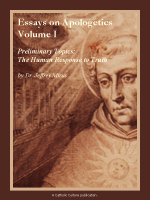
Cardinal Puljic (left) and President Van Rompuy (right).The cardinal described how many of the faithful had emigrated from Bosnia-Herzegovina and the number of Catholics had almost halved since the war twenty years ago.
They now number some 440,000.
Cardinal Puljic went on to explain that the discrimination was also evident from the fact that the authorities routinely issues construction permits for mosques, whose number had risen by several dozen in Sarajevo alone over the past few decades, while he had been waiting for 13 years for a permit to erect a small church.
The cardinal also explained how when it came to the return of church buildings, the Church's efforts were stalled even though the Court of Human Rights in Strasbourg had in one case passed a basic judgment in favor of the Church in Bosnia-Herzegovina.
The Dayton Agreement, which had ended the war, had not brought about stability and certainly not equal rights for all. He said that tens of thousands of refugees were still waiting for the opportunity to return.
But despite the discrimination practiced against the Catholic population, the Catholic Church was still working unceasingly for reconciliation with the two other groups, the Muslims and the Orthodox, the cardinal said.
European Council President van Rompuy thanked the Cardinal for his frank words. He believed that the "only way out of the crisis is a European perspective."
He stressed that this would result in greater rule of law, stability and the elimination of discrimination. To bring Bosnia-Herzegovina closer to the European Community and to enable it to attain candidate status, the country had to fulfill the minimum requirements of rule of law, human rights and democracy.
The Cardinal pointed out that the time available was not unlimited. He noted that a certain radicalization was in progress and this worried him. He recalled the pleas of the Bosnia's to the European powers in the Middle Ages for help against the Ottomans.
These pleas had not borne fruit and the Bosniaks had then been suppressed for centuries. Van Rompuy repeated, "one way or the other the future of Bosnia-Herzegovina lies in Europe, namely in its integration in the EU." This gave cause for hope, he thought.
The meeting with the European Council President was the start of a series of conversations with EU parliamentarians and high-ranking members of the EU Commission, with whom possibilities for providing aid to specific reconciliation projects were also discussed.
It was the third time that ACN had organized a program of visits for leading bishops from crisis areas to Brussels, the aim being to make European politicians aware through authentic eye-witness reports of the persecution of or discrimination against Christians.
In previous visits Bishops from Iraq and Pakistan had reported on their situation. This time an area within Europe itself was concerned.

With picture of Cardinal of Sarajevo Vinko Puljic (left) and President Herman Van Rompuy (right). © The Council of the European Union

Tuesday, October 9, 2012

MISSION: Leading prelates speak about mounting worldwide secularization

Leading prelates speak about mounting worldwide secularization

CWN - October 09, 2012

Addressing the afternoon session of the Synod of Bishops on October 8, the presidents of five continent-wide groups of episcopal conferences offered insight into the spread of secularization in their regions.

"Europe must be evangelized. It needs it," said Cardinal Péter Erdõ, president of the Council of European Episcopal Conferences. "De-Christianization is accompanied by repeated juridical, as well as physical, attacks against the visible presence of the manifestations of faith … The vast majority of cases of violence and of discrimination because of religious belief are acted out against Christians, especially Catholics, in Europe."

"In the majority of the continent, there is a spreading of ignorance about the Christian faith," he added. "Many of the mass-media broadcast a presentation of the Christian faith and history that is full of lies, misinforming the public as to the content of our faith as well as to what makes up the reality of the Church."

"Another challenging factor which New Evangelization in Africa must not overlook is the actuality of Islamic fundamentalism on the continent," said Tanzanian Cardinal Polycarp Pengo, president of the Symposium of Episcopal Conferences of Africa and Madagascar. "In regard to this, the evangelizers must face the difficulty of dialoguing with the vast majority of good Muslims who however, are mute and the small groups of fundamentalists who are not prepared to accept even objective truth which is opposed to their preconceived position."

In addition to the five leaders of continent-wide groups of episcopal conferences, three other prelates spoke, including Cardinal Angelo Sodano, dean of the College of Cardinals.

"The phrase 'for the transmission of the faith' does not seem entirely adequate, because as we well know, faith is not transmitted on our part, since it comes from the grace of God, as well as from the decision of man who welcomes such a gift," he said. "And it is precisely to invoke such grace that the Church constantly proposes to us the apostolate of prayer alongside the apostolate of action."

Recently having reread the Book of Revelation, Cardinal Sodano said he was "able to reflect on the reality of evil in the world, as on the mystery of man's freedom, who although he sees the light, sometimes prefers to remain in darkness. Similarly I wished to meditate on the pages of the Apocalypse that describe to us the devastating presence of Satan in human history. But it is always comforting to read in the same Book of Revelation how in the end it is the victorious power of Christ which shines over all human misery."

"We should all carry out our work of evangelization in great humility, knowing that we are not the first to work in the vineyard of the Lord nor will we be the last," he added. "We are not the first because others, for 2,000 years, preceded us in this pastoral undertaking. We are not even the last because others will come after us to continue this work, until the end of human history, when we will have a new heaven and new earth."


Additional sources for this story
Some links will take you to other sites, in a new window.

MISSION: New Evangelization for the Transmission of the Christian Faith

Pope reflects on Gospel, confession of faith

CWN - October 09, 2012

A day after Pope Benedict inaugurated the Thirteenth Ordinary General Assembly of the Synod of Bishops with a solemn Mass and the declaration of two new doctors of the Church, the synod fathers opened their deliberations with the praying of Terce (Midmorning Prayer), during which Pope Benedict delivered a lengthy meditation.

The topic of the synod is "The New Evangelization for the Transmission of the Christian Faith."

In his meditation, the Pontiff traced the history of the word evangelium (Gospel) from the Book of Isaiah to its use at the time of Augustus, the first Roman emperor. "'Gospel' means: God broke his silence, He spoke to us and entered into history," the Pope reflected. "This fact as such is salvation: God knows us, God loves us, has entered into history. Jesus is his Word, the God who showed that he loved us, who suffered with us even unto death, then rose again."

The Pope then reflected on Nunc, Sancte, nobis Spiritus, one of the two hymns for Terce in the Latin edition of the Liturgy of the Hours.

"We cannot make the Church; we can only make known what [God] did," he said. "The Church did not begin with our actions but with the actions and word of God … The fact, then, that each synodal assembly begins with prayer is no mere formality; rather, it is evidence of our awareness that the initiative is always God's: we may implore it, but the Church can only cooperate with God."

Pondering the meaning of the word confessio, which appears in the hymn, the Pope added that "the Christian confession includes essentially the willingness to suffer: this seems to me very important."


SCIENCE / Ethics : Nobel Prize for medicine a triumph for ethics

Catholic leaders: Nobel Prize for medicine a triumph for ethics

By Simon Caldwell
Catholic News Service

MANCHESTER, England (CNS) -- Catholic leaders in Europe hailed the decision to give a Nobel Prize to two pioneers of adult stem-cell research as a triumph for ethics.

A statement from the Commission of the Bishops' Conferences of the European Community, known as COMECE, said that awarding the Nobel Prize in physiology or medicine to John B. Gurdon and Shinya Yamanaka represented an "important milestone" in recognizing the superior potential of adult stem-cell research over destructive experimentation on human embryonic stem cells.

The Anscombe Bioethics Centre, an institute serving the Catholic Church in the United Kingdom and Ireland, also described the award as an "achievement of great ethical significance."

"This technique offers hope of progress in stem-cell research without relying on the unethical destruction of human embryos," said David Jones, director of the Anscombe center in Oxford, England.

"The past attempts to clone human embryos and the bizarre experiments to create admixed human-nonhuman embryos have delivered nothing," he said.

"In contrast, the transformation of adult cells into stem cells is making great progress," he continued. "This is science at its best: both beautiful and ethical."

The Nobel committee said England's Gurdon and Yamanaka of Japan had "revolutionized" science through their work.

"These discoveries have also provided new tools for scientists around the world and led to remarkable progress in many areas of medicine," the committee said.

Both scientists were involved in research into changing mature cells into stem cells, which have the potential to become specialist organ cells and be harvested in the potential treatment of a variety of diseases.

Many hope such work may prepare the ground for therapies to repair heart tissue after heart attacks, for instance, or to reverse the progress of Alzheimer's and Parkinson's diseases.

Gurdon distinguished himself by using an intestinal sample to clone frogs, and Yamanaka pioneered a technique of reprogramming mature cells to become "pluripotent" by altering their DNA.

In an Oct. 8 statement, COMECE said the award should encourage European Union institutions to switch funding from "ethically problematic and scientifically and economically less-promising" embryonic stem-cell research to non-embryonic stem cell research, which held out greater potential.

"This is an important milestone in recognizing the key role that non-embryonic stem cells play in the development of new medical therapies as alternatives to human embryonic stem cells," the statement said.

"There have been continuing scientific advances in fields of research involving alternative stem cells ... (that) present better prospects for clinical applications; or have indeed already demonstrated widespread clinical results and do not raise any special ethical problems," it said.

"Today's Nobel Prize rewards such efforts to discover alternatives," the statement added.

END

SCIENCE: Pioneers in adult stem-cell research win Nobel Prize

Pioneers in adult stem-cell research win Nobel Prize

CWN - October 09, 2012

The Nobel Prize in Medicine has been awarded to John Gurdon and Shinya Yamanaka, two scientists whose work has centered around adult stem-cell research, which does not involve the destruction of human embryos.

"This technique offers hope of progress in stem-cell research without relying on the unethical destruction of human embryos," said David Jones, director of the Anscombe center in Oxford. "The past attempts to clone human embryos and the bizarre experiments to create admixed human-nonhuman embryos have delivered nothing."

"This is an important milestone in recognizing the key role that non-embryonic stem cells play in the development of new, medical therapies, as alternatives to human embryonic stem cells," the Commission of the Bishops' Conferences of the European Community (COMECE) said in a statement.