Search This Blog

Monday, June 6, 2016

Psalm 37:1-8

Ps 37:1-8
Do not fret because of evildoers,
Be not envious toward wrongdoers.
2 For they will wither quickly like the grass
And fade like the green herb.
3 Trust in the Lord and do good;
Dwell in the land and [a]cultivate faithfulness.
4 Delight yourself in the Lord;
And He will give you the desires of your heart.
5 Commit your way to the Lord,
Trust also in Him, and He will do it.
6 He will bring forth your righteousness as the light
And your judgment as the noonday.
7 [b]Rest in the Lord and wait [c]patiently for Him;
Do not fret because of him who prospers in his way,
Because of the man who carries out wicked schemes.
8 Cease from anger and forsake wrath;
Do not fret; it leads only to evildoing.

Friday, June 3, 2016

MISSION / Mongolia: Priests on horseback build the church from scratch

How priests on horseback built the Mongolian church from scratch
by Fr Alexander Lucie-Smith
posted Thursday, 2 Jun 2016

Bishop Wenceslao Padilla confirms a boy at Good Shepherd Catholic Parish in Ulan Bator, Mongolia (CNS)

Intrepid missionaries in East Asia have something to teach Western Catholics

Good news from an unexpected and little known quarter of the Universal Church: the first native Mongolian priest is shortly to be ordained.

Congratulations to the Reverend Joseph Enkh. May he be the first of many Mongolians to be ordained, and may his ministry bring joy and consolation to God’s faithful people in Mongolia. Fides carries the story here. It also reports that there are about 1,000 faithful in Mongolia, which is remarkable, as the Church has only been functioning in the country since 1992.

There is more information on the local church in Mongolia from the ever-useful Wikipedia, which can be found here.

I have something of an interest in the Mongolian Church as one of my former students from Africa, a Consolata Missionary, was sent there on ordination. He was an Italian, and the third priest to go there, if memory serves, and thus something of a pioneer. Setting up a church from scratch is quite a task, and it was entrusted to, among others, priests trained in Africa, because they would be familiar with just how this is done.

How missions are started is quite instructive, particularly for people like us, who live in England many centuries after St Augustine first landed in Kent. In Mongolia, there were some resident foreign Catholics, working in embassies and for aid organisations, and thus at the beginning there was a congregation for the missionaries to say Mass for.

But apart from this, the first missionaries to arrive back in 1992, when the country opened up to the world, would have been regarded as very strange, almost like visitors from another world.

The most important thing for any mission is to establish a way into the culture of the country it aims to evangelise. This means in the very first place learning the language, which can be quite hard. It also means trying to understand the mindset of the people whose language you learn. Mongolia presents particular challenges. There are cities, but much of the population is very thinly spread out over the vast territory, which consists of wide grasslands.

The Mongols are of course, historically, a nomadic people, and superb horsemen. Missionaries from Africa know about pastoralist cultures, and would very soon cotton on to the necessity of learning to ride. Given that the population is in many places not sedentary, it makes little sense building churches outside the main cities. The priest and the catechist, as in the territory of the Maasai, need to be on the move, with the people they aim to evangelise, so where the people are, they can be too.

One favoured strategy of missionaries in this situation is to open not a church, but to a bore hole and water trough to which people from miles around will bring their animals to drink, and when waiting to water them, will engage with the missionaries. Once a trough is built, it will become a focal point for the pastoralists. After the trough come other useful institutions such as clinics, and sometimes schools.

No doubt these are the sorts of things that the small band of Catholic clergy in Mongolia will be familiar. And when Fr Joseph Enkh is ordained, he will, doubtless, spend many an hour on horseback riding across those vast empty spaces in search of his countrymen, eager, I am sure, to tell them the Good News. May he be granted many receptive listeners, thorough the grace of God.

Does this have any lessons for England today? Well, yes. At a time when not so many come to church, we need to move from sedentary to mobile, and, rather than waiting for people to come to us, go to where they are to be found. Water troughs will not be appropriate, but there may well be some similar strategy more fitted to contemporary Britain.

Gender Politics: Transgender toilets are a reality shock for the Left

Transgender toilets are a reality shock for the Left, and the stress is showing
by Robert Wargas
posted Friday, 3 Jun 2016

Visitors walk past a men's bathroom at the 
Statehouse in Boston (AP)

The latest skirmish has revealed the inner contradictions of identity politics

Here in the United States, the transgender toilet wars are heating up. The latest battle concerns not Christians, however, but the political Left: The director of the American Civil Liberties Union (ACLU)’s chapter in Georgia has resigned, citing the organisation’s support for allowing transwomen (i.e. those who “identify” as female) in women’s bathrooms.

For Maya Dillard Smith, the director in question, the ACLU’S stance was simply hypocritical. In a statement, she said the left-leaning organisation was guilty of serving as a “special interest organization that promotes not all, but certain progressive rights”.

Apparently Smith had taken her young children into a public toilet and had to endure the presence of “three transgender young adults over six feet with deep voices”, who entered after them.

“My children were visibly frightened”, Smith said, “concerned about their safety and left asking lots of questions for which I, like many parents, was ill-prepared to answer”.

Under decree from President Barack Obama, public schools must allow transgender people to use the toilet corresponding to the gender with which they identify. The ACLU has supported Obama’s decision, which is based on Title IX, a section of U.S. federal law that prohibits sex-based discrimination in educational programs receiving federal funding. The ACLU has even sued the governor of North Carolina, whose state passed a law requiring that people in government buildings use bathrooms matching the sex on their birth certificates.

As we can see, the contradictions of identity politics are finally beginning to manifest themselves in these kinds of public skirmishes. Now we have not just Christians and conservatives fighting the Left in the culture war, but the Left fighting itself. It was bound to happen.

Here’s why. The Left assigns victim status to certain groups. In practice, this means one must never oppose, question, criticise, contradict, or blame the victim group. It also means one must always support whatever protective legal measure is proposed in the name of their group rights, regardless of how strongly it goes against established culture, custom, or law.

What happens, then, when the interests of two victim groups (in this case, women and transgender people) conflict with one another? The normal solution would be to shift blame to the official oppressor, which among left-wing culture warriors is the white, heterosexual Christian male.

But in cases like this, that isn’t so easy. There’s a big difference between an abstract question – “Should transgender women be allowed in female bathrooms?’ – and a concrete scenario: that is, being a female, walking into a bathroom and having a deep-voiced person with the wrong anatomy follow you in. The first is a moral debate that costs you nothing to have; the second is a very real circumstance with which you or your children may have to contend. And when liberals finally do contend with it, even they start to question their own wisdom.

Often you’ll find that liberals act very conservative when no one is watching.

Tuesday, May 31, 2016

MISSION: Sixty-one cloistered nuns visit a Prison

These 61 cloistered nuns visit a Prison


Credit: Anneka via www.shutterstock.com.

Santiago, Chile, May 28, 2016 / 04:02 pm (CNA/EWTN News).-
A group of 61 cloistered nuns from six monasteries in Santiago, Chile made an historic visit to the local Women's Prison Center to spend time with the inmates and attend Mass with them.

“I don't know if in the 400 years of the history of Santiago, there has been another occasion when contemplative sisters from several monasteries joined together to celebrate the Eucharist with a group of women who are incarcerated, but who are sisters in the faith,” said Cardinal Ricardo Ezzati, who celebrated the Mass.

The nuns made the trip to the facility on May 23 to mark the Jubilee of Consecrated Life as part of Pope Francis' Year of Mercy.

Cardinal Ezzati said that the nuns made the request to visit with the inmates “so the sisters who contemplate the face of God every day in prayer could contemplate him in the face of people who are suffering, going through a hard time in their lives.”

“The dear cloistered nuns are the city's uplifted arms to intercede before God for all of us, especially those who are suffering the most,” he said.

After the Mass, the religious sang a traditional Chilean song to honor the Virgin Mary, and to everyone's surprise, four of them got up to dance. They then went to the prison courtyard where they continued visiting with the inmates.

For Sister Maria Rosa of the Discalced Carmelites from the San José monastery, the day was “a grace to share with them, to really feel like a sister with them, to feel their sorrow, their joy and to become one with them.”

“It strikes me that this encounter would be on the feast of the Holy Trinity. That means that God dwells in every soul,” she told the archdiocesan communications office.

Railín, one of the inmates, said that “it was good that they came and prayed for us. The sisters and bishops coming helped support us, we need a lot of people to come and see us.”

Ana Chacón, another inmate, said that the religious “ give us the spirit of the Lord, it's a blessing to have them here. Seeing the dear cloistered nuns doing the traditional dance and swinging the kerchiefs was something new.”

Pope Francis' Year of Mercy runs from December 2015 to November of 2016, with the aim of encouraging Catholics to experience God's mercy – both in the Sacrament of Confession and being concrete signs of this mercy in charitable work.

Sunday, May 29, 2016

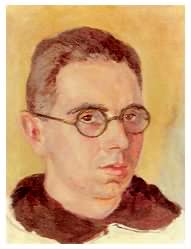
Blessed Fr. Hilary Januszewski (1907 – 1945) - Feast 12 June

Hilary Januszewski

Bl. Hilary Januszewski (1907 – 1945) - Priest and Martyr
Feast Day – June 12th

Hilary Januszewski
Born June 11th, 1907 in Krajenki, Poland and was given the name of Pawel. He received a Christian education from his parents, Martin and Marianne. He attended the college in Greblin, and then continued his studies at the Institute of Suchary, but had to abandon these due to economic difficulties of the family.  He entered the Order of Carmel in 1927 and was ordained a priest on July 15th, 1934. He obtained his lectorate in theology and the prize for the best students of the Roman Academy of St. Thomas and in 1935 returned to Poland to the monastery in Cracow. On his return to Poland he was appointed professor of Dogmatic Theology and Church History at the institute of the Polish Province in Cracow.
 On November 1st, 1939 he was appointed prior of his community.  One year later, the German forces decreed the arrest of many religious and priests. On September 18th, 1940 the Gestapo deported four friars from the Carmel in Cracow. In December, when other friars were arrested, Fr. Hilary decided to present himself in exchange for an older and sick friar. In April 1941 he was sent to the concentration camp of Dachau. There he was a model of prayer life, encouraging others and giving hope for a better tomorrow. Together with the other Carmelites, among whom was Blessed Titus Brandsma, they often joined in prayer. To help the sick, 32 priests presented themselves to the authorities.  His apostolate lasted 21 days because, infected by typhus, he died on March 25th, 1945, a few days before the liberation of the concentration camp.. Hilary Januszewski was beatified by Pope John Paul II on June 13th, 1999, during his apostolic visit to Warsaw (Poland). On this occasion the Pope beatified 108 Polish martyrs of the Second World War, victims of Nazi persecution.

"All real desire in our hearts is Prayer" - Hurnard

     [A] very important thing to remember, and which I for one have been all too prone to forget, is that all real desire in our hearts ( [and our] wills) is prayer, because God looks on the thoughts of the heart and sees what our real desires are.  It is the things which we really want, and not necessarily the things that our mouths are saying that we want, that is the real prayer which God perceives.
     Therefore when we are in contact with Him, all the desires of our hearts are really prayers, all our thoughts are creative.  No wonder our Lord urged so solemnly that we should abide in Him, have our minds stayed upon Him.  We really possess our mental faculties simply and solely that we may use them under the direction and control of the Holy Spirit.  It is this which differentiates human beings from animals, namely this faculty of communicating with God through the contact of our minds with His.

FROM: "God's Transmitters" by Hannah Hurnard, Tyndale House Publishers, Inc.; Wheaton, IL. 1982.
p. 22-23.

Bl. Sister Elisha of St. Clement - FEAST !

Blessed Sr. Elisha of St. Clement

Bl. Elisha of St. Clement (1901 – 1927) ~ Virgin
Feast Day – May 29th


Born in Bari, Italy on January 17, 1901 to deeply devout parents; the third of nine children, four of which died in infancy. At her baptism four days later, she was given the name Theodora, ‘gift of God’.

On May 11, 1911 at the age of 10, she received her First Communion. The night before she dreamt of St. Therese of the Child Jesus who predicted to her: “you will be a nun like me”. She eventually entered the Association of the Blessed Imelda Lambertini, a Dominican nun, and afterwards joined the ‘Angelic Army’ of St. Thomas Aquinas.

Her spiritual director, Fr. Peter Fiorillo, O.P. introduced her to the Third Order Dominicans who accepted her as a Novice on April 20, 1914, and she made her profession on May 14, 1915. At the end of 1917 Theodora sought advice from a Jesuit priest, Fr. Sergio Di Gioia who became her new confessor. About a year later, he directed her and her friend Clare Bellomi to the Carmel of St. Joseph, Via De Rosi, in Bari.

Theodora entered the Carmelite Community of St. Joseph in Bari on April 8, 1920 (then the feast day of St. Albert, author of the Carmelite Rule) and was clothed in the Habit on November 14th – The Feast of St. John of the Cross, of the same year taking the name of Sister Elisha of St. Clement. She made her simple vows on December 4, 1921 and her solemn profession on February 11, 1925. In 1927 she was appointed sacristan. In January 1927 she was greatly weakened by a bad influenza and started to suffer from frequent headaches but suffered with them without taking any medication.

On December 21 of the same year, she began to have a high fever and on the 24th the doctor was summoned who diagnosed her with possible meningitis or encephalitis, but did not consider it to be serious. The next morning however, on Christmas day two other doctors were called to her bedside, and who declared her condition irreversible. Sister Elisha of St. Clement died at noon on December 25, 1927. She was proclaimed Blessed on March 18, 2006 by Pope Benedict XVI.

From: https://thirdordercarmelite.wordpress.com/carmelite-feast-days/elisha-of-st-clement/

Monday, May 23, 2016

Rene Voillaume - 'Letters to the Petits Freres'

Rene Voillaume - from 'Brothers of Men: Letters to the Petits Freres'
     
My mind often dwells upon that constant and twofold imperative which our life imposes on us: we must detach ourselves from all things and yet give our lives to mankind.  For that is what is involved.  There is no way of avoiding these contradictory aspects of our religious consecration.  We are indeed bound to detach ourselves from all things, to hold on to nothing, to absolutely nothing, just as if we were entering a Carthusian novitiate!

      And then I think of the imperative which requires our presence among men, of our assuming responsibility for them before Christ, of our sharing those conditions of life which plunge us again up to the neck into all the tumult, all the concerns of the daily life of the laity most productive of a materialistic outlook.  But this is the road we have to take, and in my view it is precisely through this effective self-giving to men that in our weakness, poor Petits Freres as we are, we learn to keep faithful.  It is in this presence and through these demands that our utter detachment must be achieved.  Of course, we need the desert, but not always.  We are not monks or hermits, even though we must share their essential disposition of a radical detachment from all created being.  We are not hermits, and is my personal belief that we cannot reach total generosity or sustain it, especially at the time of our Lord's second summons, if we have failed to give our lives to men for their salvation.  We are, in fact, vowed to take other men's burdens upon our shoulders, with all the dullness, and sometimes even the crushing weight which that implies.
     We lack the ability to lead a supposedly angelic and solitary life; all the more dangerous because we should certainly form a wholly inaccurate idea of the life of the angels and of the vision of the mystery of love which animates the life shared by the saints!  We have within us a vital need to love, and the necessity also, if we would break through the straight-jacket of our ego, for effective self-giving, springing from a great love.  The most authentic grace of contemplation does not run counter to these essential needs of our human life; it transforms them and purifies their manifestations, and, as regards ourselves, even serves, as an instrument, of that hold which those we love have upon us, those to whom we belong, with that binding service, that wrenching from self love which results from it.  Grace, in order to lift us above ourselves, proceeds to utilise this need for love which, left to its natural bent, draws so many far away from God.  But, in this case, the need becomes, in God's light and strength, an instrument of divine love.  Thus the contemplation of the mystery of love in the reality of God and in our self-giving to mankind that allows us no repose, far from contradicting each other, meet in unison in the undivided love, the beating of Christ's heart.  A Christian, made one in love, becomes in this way, with Jesus, a shepherd of men, leading them to living pastures.

- Letter from the Railway Station, Dijon, 24 March 1957

From: Rene Voillaume - 'Brothers of Men: Letters to the Petits Freres'.  Darton, Longman and Todd, 1966.  p. 34-35.

Sunday, May 22, 2016

Why 'God and the Gay Christian' Is Wrong About the Bible and Same-Sex Relationships

I too experience unwanted same sex attraction and I agree with the article below regarding Vines' misrepresentation of facts regarding Scripture and homosexual behaviour.
b. John :)
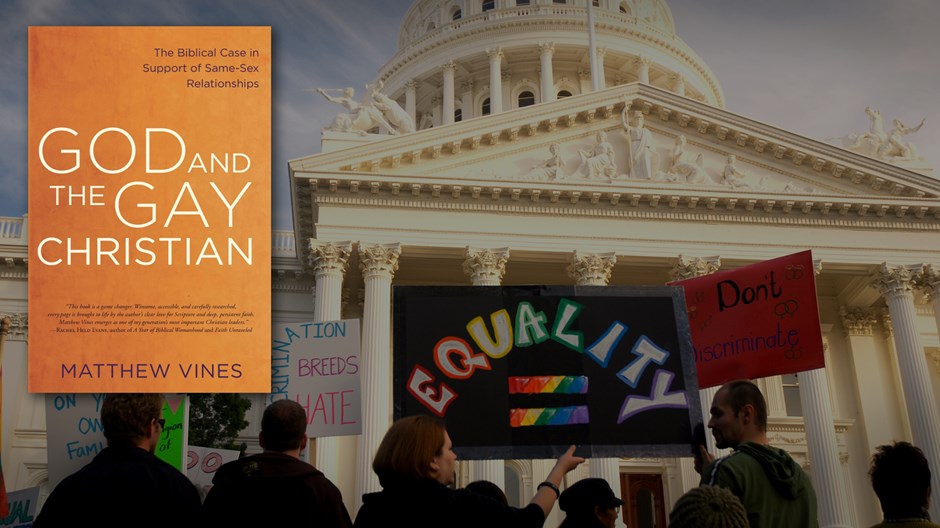

Why 'God and the Gay Christian' Is Wrong About the Bible and Same-Sex Relationships
Matthew Vines rehashes older gay-friendly arguments for a modern audience. But those arguments still don’t square with Scripture.

Christopher Yuan/ JUNE 9, 2014

In March 2012, Matthew Vines posted a video on YouTube suggesting that "being gay is not a sin," and that the Bible "does not condemn, loving, committed same-sex relationships." He spoke eloquently from the heart with poise, conviction and vulnerability. The video quickly went viral.

Vines is a bright young man raised in a Christian home. At age 19, he left Harvard University after his third semester so that he could come out to his family and friends in Wichita. He knew that his father would not agree with the way he reconciled his sexuality with Scripture. So Vines sought to arm himself with biblical scholarship on the affirmation of same-sex relationships and strove to convince his family and church that they were wrong—that homosexuality is not a sin.

Vines's new book, God and the Gay Christian: The Biblical Case in Support of Same-Sex Relationships, expounds further on the arguments made in his video. His aim is not to present new information, but to synthesize gay-affirming arguments and make them accessible for a broader and younger audience. Vines does a good job fulfilling this goal. Unfortunately, his book consists of some logical and exegetical fallacies, and it does not address the shortcomings of the authors to whom it is most indebted. And although Vines professes a "high view" of the Bible, he ultimately fails to apply uncomfortable biblical truths in a way that embraces a costly discipleship.

Good and Bad Fruit

God and the Gay Christian begins with an emotional appeal from Matthew 7:18, "A good tree cannot bear bad fruit." Vines states that universal condemnation of same-sex relationships has been damaging and destructive for those who identify as gay Christians, producing bad fruit (depression and suicide, for instance). In contrast, Vines asserts that loving, same-sex relationships produce good fruit. Additionally, he claims that the biblical authors did not understand sexual orientation as a fixed and exclusive characteristic. Recognizing that celibacy is a gift, Vines contends that this gift should only be accepted voluntarily. Citing 1 Timothy 4:3, Vines even argues that those who forbid gay marriage are false teachers who promote hostility toward God's creation.

Six biblical passages directly address homosexuality, and Vines insists that none address same-sex orientation as we know it today. Thus, in Genesis 19, the sin of Sodom is not related to loving, consensual same-sex relationships, but to the threat of gang rape. Leviticus 18:22 and 20:13 are not about committed same-sex relationships, but about the improper ordering of gender roles in a patriarchal society (men taking the receptive, sexual role; women taking the penetrative, sexual role). Paul in Romans 1:26-27 is not referring to monogamous, gay relationships, but instead to lustful excess and the breaking of customary gender roles. In 1 Corinthians 6:9 and 1 Timothy 1:10, Paul does not condemn same-sex relationships as an expression of one's fixed and exclusive sexual orientation, but instead condemns the economic exploitation of others.

After discussing these six passages, Vines passionately argues that God blesses the marriages of same-sex couples. Marriage as a one-flesh union is a reflection of Christ's love for the church. This relationship between Christ and the church is not a sexual union based upon gender complementarity. Therefore, Vines asserts that "one flesh" refers to a binding covenant of deep relational connection that is not dependent upon gender differences. For Vines, "sexuality is a core part of who we are" and same-sex orientation is "a created characteristic, not a distortion caused by the fall."

In Vines's 2012 video, he presents himself with a gentle and winsome demeanor. The tone of God and the Gay Christian is quite different. Unlike others who advocate respectful dialogue on this divisive issue, Vines charges that those who do not affirm same-sex relationships are sinning by distorting the image of God and are essentially responsible for the suicides of many gay Christians. This does not help to foster respectful dialogue on an already divisive issue.

Emphasis on Experience

Throughout the book, Vines declares that he holds a "high view" of the Bible. From this perspective, he says, one can still affirm gay relationships. One of the main weaknesses of God and the Gay Christian is that Vines's methodology of biblical interpretation clashes with the high view of the Bible he claims to hold. A high view of Scripture is more than just talking about Scripture. It is learning from Scripture. Vines certainly talks about Scripture, but he tends to emphasize his experience and tangential background information, downplaying Scripture and its relevant literary and historical context.

Experiences do inform our interpretation of Scripture. As a racial minority, biblical texts on sojourners and aliens mean more to me than to someone who is not a racial minority. However, experiences can also hinder the interpretation of Scripture. Although it is impossible to completely distance the interpretive process from one's experiences, it is important to recognize our biases and do our best to minimize them. A high view of Scripture involves measuring our experience against the Bible, not the other way around.

It appears to me that Vines starts with the conclusion that God blesses same-sex relationships and then moves backwards to find evidence. This is not exegesis, but a classic example of eisegesis(reading our own biases into a text). Like Vines, I also came out as a gay man while I was a student. I was a graduate student pursuing a doctorate in dentistry. Unlike Vines, I was not raised in a Christian home. Interestingly, a chaplain gave me a book from a gay-affirming author, John Boswell, claiming that homosexuality is not a sin. Like Vines, I was looking for biblical justification and wanted to prove that the Bible blesses gay relationships. As I read Boswell's book, the Bible was open next to it, and his assertions did not line up with Scripture. Eventually, I realized that I was wrong—that same-sex romantic relationships are a sin. My years of biblical language study in Bible college and seminary, and doctoral research in sexuality, only strengthened this conclusion. No matter how hard I tried to find biblical justification and no matter whether my same-sex temptations went away or not, God's word did not change. Years later I found out that the gay-affirming chaplain also recognized his error.

In God and the Gay Christian, Vines relies heavily upon other authors, many of whom also began with a strong gay-affirming bias. John Boswell was an openly gay historian. James Brownson, a more recent scholar, reversed his stance on the morality of same-sex relationships after his son came out. Michael Carden, a fringe gay Catholic who dabbles in astrology, has written on the "homo-erotics of atonement" and contributed to the Queer Bible Commentary, which draws upon "feminist, queer, deconstructionist, utopian theories, the social sciences and historical-critical discourses." Dale Martin, an openly gay man, believes neither that Jesus' resurrection is a historical fact, nor that the historical Jesus believed he was divine. These views do not represent a "high view" of the Bible.

Leaning upon experience rather than biblical context leads Vines to some inaccurate interpretations. For Vines, "bad fruit" in Matthew 7:17 refers to the experience of emotional or physical harm. But this does not line up with the storyline of the Bible. Under Vines's definition, crucifixion, martyrdom and self-denial would all be considered "bad fruit." Matthew 7:14 reads, "For the gate is narrow and the way is hard that leads to life, and those who find it are few." Following Jesus is not easy and can result in very difficult trials. Vines also neglects to note that two different Greek words are translated into one word, "bad." "Bad tree" literally means a rotten or diseased tree, while "bad fruit" is literally wicked or evil fruit. From the context of Matthew 7, "bad fruit" does not mean emotional or physical harm but refers to sin.

For Vines, "sexuality is a core part of who we are." This perspective makes his experiences (feelings, attractions, desires, orientation) essential to his identity. Our society may place a great emphasis upon a sexual identity, but Scripture does not. As a matter of fact, our identity should not be placed in anything (such as our sexuality, gender, or race) other than Jesus Christ.

Vines asserts that the biblical authors did not understand sexual orientation as we do today, as a fixed and exclusive characteristic. It is one thing to say that the biblical writers were ignorant. But it is a whole different matter to claim to hold to a "high view" of Scripture and imply that the author of the Bible, God himself, does not understand sexual orientation.

Vines is wrong to claim that orientation is fixed and exclusive. Although male sexuality may be more fixed, the latest research in lesbian and feminist studies shows that female sexuality is quite fluid and not as fixed and exclusive as Vines claims. The view of same-sex orientation expressed in God and the Gay Christian mirrors Vines's own gay-male experiences. But according to the latest research, it does not represent the broader gay and lesbian community.

Ignoring Context

God and the Gay Christian includes a good amount of historical background information. For a non-academic book, it is impressive to see all the references to primary sources, such as Plato, Aristotle, Philo, Josephus, Jerome and Augustine. It is disappointing, then, to see insufficient interaction with the actual biblical texts. Investigating historical context is very important, but this must go hand in hand with the investigation of a passage's own literary context. It is easy to deconstruct one or two seemingly inconvenient words in light of tangential background information, but only if one disregards the immediate historical and literary context in which these words appear.

Vines discusses why Christians do not obey all the laws in the Old Testament. However, he does not discuss why Christians do obey some laws in the Old Testament. There is much discussion about the relevance of Old Testament law. But where the New Testament reaffirms it, Christians remain obligated to obey it. Paul reaffirms Leviticus 20:13 in 1 Corinthians 6:9 and 1 Timothy 1:10, using a compound Greek word (arsenokoitai) taken from two words found in the Leviticus passage of the Septuagint ,the Greek translation of the Old Testament.

Vines dismisses this important allusion. He contends that the parts of a compound word do not necessarily help uncover the meaning. As an example, he states that "understand" has nothing to do with "standing" or "under." Yet etymologists (those who study of the origins of words and the historical development of their meanings) can trace the origin and meaning of "understand" to Old English.

Vines notes the use of arsenokoitai in the vice lists of three second-century texts. Even though he admits the vice lists are of limited help, he tries to link arsenokoitai to economic exploitation through word association. Vines might have a case if every vice in each list is related to economic exploitation. But these lists contain a variety of vices, related and unrelated. For instance, 1 Corinthians 6:9-10 mentions idolaters, adulterers, drunkards, and slanderers.

Vines also asserts that arsenokoitai is only minimally associated with sexual sin because it is not always mentioned alongside other sexual sins—and when it is, it is separated by three words. This is insignificant, and ignores other, more relevant historical information. The Greek Old Testament was probably the most widely read piece of literature among first-century Jews and Christians. The two words, arsen (male) and koite (bed), occur together six times in its pages. On four occasions, the reference is to women lying with men, and on the other two (Leviticus 18:22 and 20:13) the reference is to men lying with men. Vines and others who rely upon second-century texts to explain arsenokoitai, dismissing the Greek Old Testament, are inconsistent in applying background information. Again, their biases prevail in their attempt to interpret Scripture.

For Vines, Leviticus 20:13 is not a universal condemnation against same-sex intercourse. Rather, it is "centered around the proper ordering of gender roles in a patriarchal society." Men were not to act like women by taking the receptive role. Ironically, Vines dismisses Philo (a first century Jewish philosopher) for explicitly linking Sodom's sins to same-sex behavior, but then affirms Philo for linking the sin of Leviticus 20:13 to "being treated like women." This is another example of bias and an inconsistent use of background information. If the sin of Leviticus 20:13 is merely a matter of men adopting the woman's sexual role, then only the man in the receptive role should be condemned. However the verse states that "both of them have committed an abomination." Both men are condemned.

Gospel-Centered Reformation

Vines exhorts gay-affirming Christians to help usher in a modern reformation by "speaking the truth," which for him starts with personal life stories. Indeed, we must share our personal experiences, but experience should not replace truth. I completely agree with Vines that many gays, lesbians, and other same-sex attracted people have struggled to reconcile their faith and sexuality without much help from the church. Some churches are unwilling to talk about homosexuality, afraid that it will open up a can of worms. Other churches only talk about the immorality of it, while neglecting to discuss how the transformative message of the gospel is also for gays and lesbians. We must do a better job of walking with those who are working through issues of sexuality, regardless of whether they are acting upon their temptations or not.

We have failed to provide gospel-centered support for same-sex attracted Christians. As a 43-year-old single man who did not choose singleness, I know firsthand the challenges of obedience. But there are also blessings, just as marriage involves challenges and blessings. The church musthave a robust, practical theology of singleness which involves more than just abstinence programs and the Christian singles ghetto (also known as the "college and career" group). We are not ready to address the issue of homosexuality (or even sexuality in general) if we have not first redeemed biblical singleness.

We have failed to walk alongside same-sex attracted Christians to whom God has provided a spouse—of the opposite sex. Vines limits the power of God by actually believing that there is nopossibility for gays and lesbians to marry someone of the opposite sex. He even believes that encouraging such marriages "is not Christian faithfulness," because they would most likely end in divorce. In this, he offhandedly dismisses many marriages that have not failed. Certainly, there are challenges with these relationships, and getting married should never be the main focus. But fear of failure should not trump gospel-centered living. This is true Christian faithfulness.

We have failed to offer Christ to the gay and lesbian community. We have also failed by giving the impression that orientation change and reparative therapy is the solution. Sanctification is not getting rid of our temptations, but pursuing holiness in the midst of them. If our goal is making people straight, then we are practicing a false gospel.

Jesus did not come to call the righteous, but was accused of being a friend of sinners. Too often, we are more like the older, self-righteous brother of the prodigal son, and our hearts are hardened toward the lost. This is truth at the expense of grace. But the approach that Vines suggests—grace at the expense of truth—also misses the mark. It overlooks the theology of suffering and gives us Christ without the Cross. Jesus, who personifies love, came full of grace and full of truth (John 1:14). Might this be how we live as well.

Christopher Yuan (www.christopheryuan.com) is co-author, with his mother, of Out of a Far Country: A Gay Son's Journey to God, A Broken Mother's Search for Hope (WaterBrook Press). He teaches the Bible at Moody Bible Institute and has an international speaking ministry.

Saturday, May 21, 2016

"Real intercession depends upon thoughts and desires created in us..." - Hurnard

Real intercession depends upon thoughts and desires created in us, and liberated through us by the Lord of Love Himself.  Is it not beautifully possible that He then, from the broadcasting station of our minds, transmits His lovely, merciful, forgiving, healing, strengthening and creative thoughts to the minds of others, by whom they are picked up as impulses to open to light and life and love?

For we must also remember that prayer essentially is the contact of our minds with the mind of God, resulting in real conversation with Him.  But as He is God, and we are His beloved children, our prayer will take the form of a conversation in which we not only speak to Him, but also listen to Him and learn of Him.  Real meditation, as it is inspired in our minds and directed by the Holy Spirit, must surely be a most vital part in prayer, and even of intercession.  Meditating on God's Word, and longing for others to understand it too, is part of the broadcasting to which we are called.

FROM: "God's Transmitters" by Hannah Hurnard, Tyndale House Publishers, Inc.; Wheaton, IL. 1982.
p. 22.